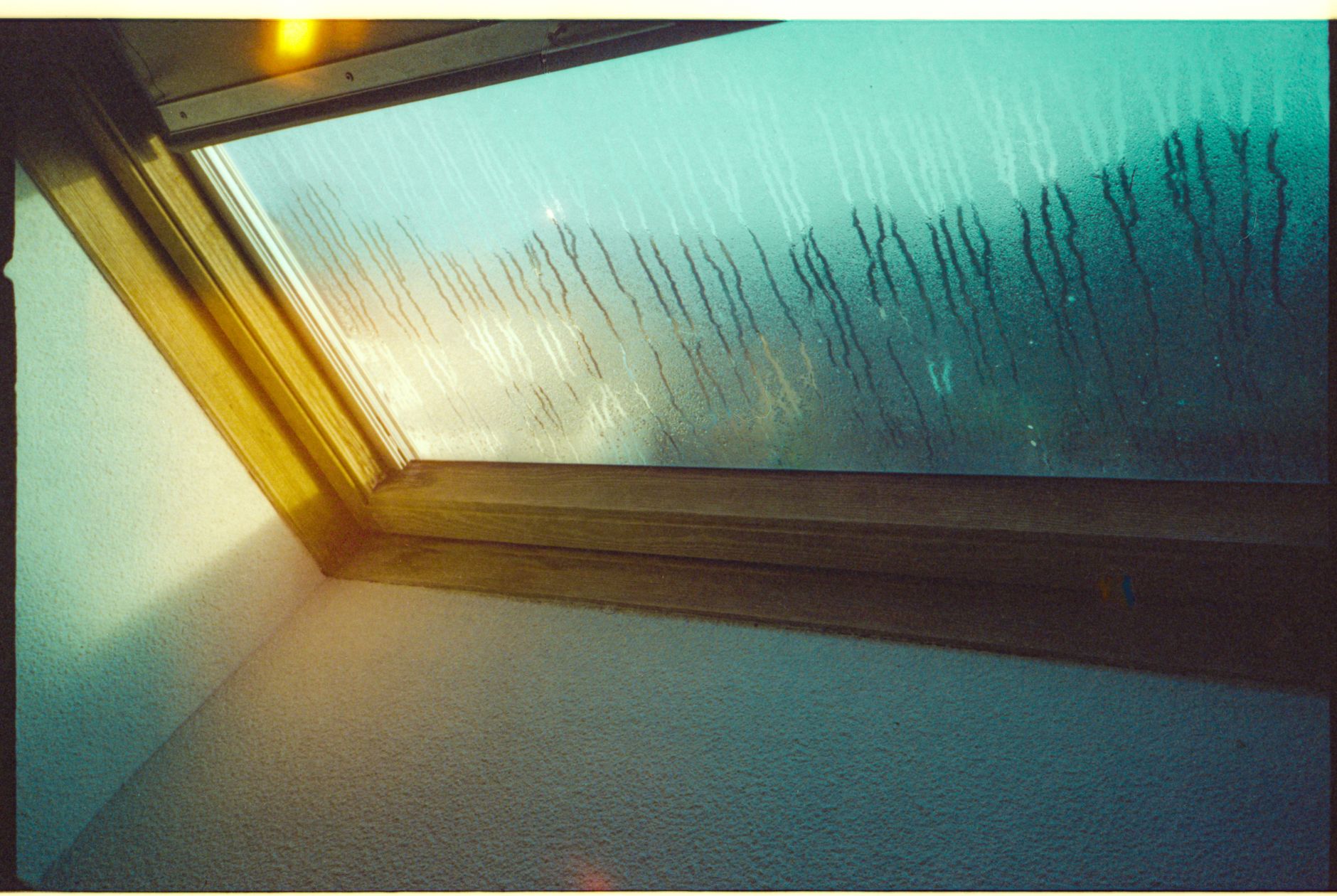
Condensation on cathedral ceilings during summer is a growing concern for homeowners and property managers. This issue often appears on ridge beams when indoor temperatures are around 65°F while roof surfaces reach 80°F. The indoor dew point often exceeds 60°F, causing the interior ceiling surface to drop below the dew point and condense.
Several factors contribute to this problem. Thermal bridging at the ridge, night-sky radiative cooling, and inadequate air sealing are primary contributors. A study by the Building Science Corp in desert-climate roofs found that white membranes created a “sky-powered cooling coil,” drawing moisture from the attic and condensing it on interior surfaces.
During the day, solar heating usually keeps roof temperatures above ambient. However, clear, dry nights allow radiative loss to space, cooling the ridge below the air temperature. This night-time cooling can be sufficient to trigger condensation if the interior air is humid enough.
Unvented cathedral ceilings are particularly vulnerable because the structural ridge creates a large thermal bridge and a “cold pocket” that can trap moisture. Proper detailing—overlapping exterior rigid foam, continuous insulation, and sealed ridge caps—can eliminate the bridge and keep ceiling temperatures above the dew point.
Practical solutions include adding ridge vents to allow moist air to escape, improving air sealing around the ridge and eave vents, installing a whole-house dehumidifier, and using radiant cooling strategies such as ceiling fans or radiant floor heating.
| Solution | Benefits |
|---|---|
| Ridge Vents | Allow moist air to escape, reducing condensation |
| Improved Air Sealing | Reduce indoor humidity by 10-15% and lower cooling loads by up to 5% |
| Whole-House Dehumidifier | Maintain lower indoor humidity levels |
| Radiant Cooling Strategies | Improve comfort and reduce energy waste |
For ProNest CX clients, these insights translate into actionable upgrades: a comprehensive air-sealing audit, ridge-vent installation, and optional radiant-cooling measures that improve comfort, reduce energy waste, and extend roof life.
Studies show that sealing air leaks in cathedral roofs can reduce indoor humidity by 10-15% and lower cooling loads by up to 5% in hot climates, according to the Building Science Corp analysis cited in the article. Many jurisdictions now require minimum air-sealing performance for new construction, and local energy codes often provide rebates for upgrades that improve thermal bridging.
Homeowners who invest in ridge-vent detailing and whole-house dehumidification typically see a payback period of 2-4 years, with ongoing savings on utility bills.
Looking to improve thermal efficiency and prevent condensation on your ceiling? Contact our team to evaluate the right upgrades for your project.
Assessing Long-Term Energy Savings
When investing in home upgrades, initial installation costs are only part of the equation. Homeowners must weigh upfront expenses against long-term utility bill reductions, thermal performance gains, and potential property value increases.
Material Quality and Durability Standards
Choosing high-performance materials—such as energy-efficient window glazing, advanced insulation fibers, or weather-resistant roofing—ensures structural longevity and minimizes ongoing maintenance overhead.
Assessing Professional Installation vs. DIY
While minor cosmetic updates can be handled independently, major efficiency retrofits require specialized expertise. Professional installation ensures compliance with local building codes and protects manufacturer warranties.
Project Timelines and Weather Windows
Home improvement schedules vary based on project scope and seasonal conditions. Proper planning ensures that exterior renovations or weatherproofing initiatives are completed efficiently without disrupting daily routines.
Maximizing Rebates and Financing Incentives
Many regional and federal programs offer tax credits or rebates for energy-efficient home upgrades. Evaluating these financial incentives early can significantly offset total project costs.
Warranty Coverage and Quality Assurance
Reliable service providers back their installations with comprehensive workmanship guarantees and manufacturer warranties, giving homeowners long-term peace of mind.
Ultimately, a successful home improvement project should enhance your property's daily comfort, boost energy efficiency, and provide long-lasting value for years to come.