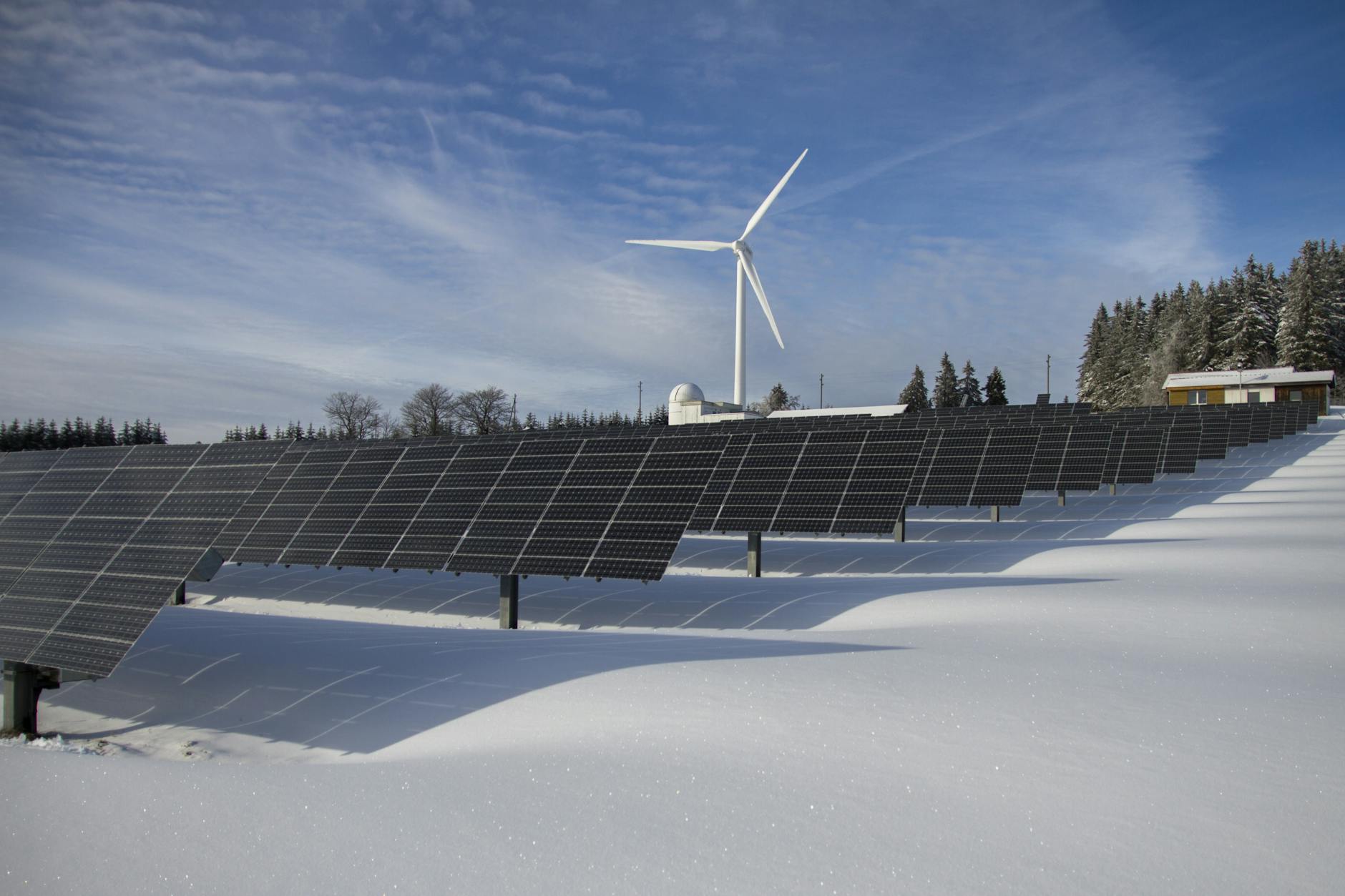
Winter solar reality vs. common myths
Many homeowners assume that a cold, short‑day season means their solar system goes idle. The truth is more nuanced. Panels still convert photons into electricity, and the physics of semiconductor cells actually favor lower temperatures.
How solar cells generate power
Solar photovoltaic (PV) modules are made of silicon wafers that create an electric current when exposed to light. The process depends on photon energy, not on ambient heat. Therefore, a panel that sits at 0 °C can produce as much—or more—electricity than the same panel at 30 °C, provided it receives comparable sunlight.
Cold improves efficiency
Every PV cell has a temperature coefficient, typically around –0.4 % to –0.5 % per degree Celsius. This means that for each degree the panel cools below its standard test condition (25 °C), its output rises by roughly 0.4 %. On a crisp January day at –5 °C, a panel can be up to 1.2 % more efficient than at 20 °C. Over a full winter season, this small gain offsets the loss of daylight hours.
In addition to the temperature coefficient, the band‑gap energy of silicon widens slightly at lower temperatures, allowing the cell to convert a marginally broader portion of the solar spectrum. While the effect is modest, it contributes to the overall winter‑time efficiency boost.
Daylight length and solar angle
The most obvious winter challenge is shorter daylight. In a northern U.S. city, December may offer only 8–9 peak sun hours compared with 14–15 in July. Additionally, the sun travels lower on the horizon, reducing the incident angle on a south‑facing roof. These factors can cut raw energy capture by 30‑40 %.
Snow, ice, and shading
Snow can be both a friend and a foe. Fresh, white snow reflects sunlight—a phenomenon called the albedo effect—potentially increasing the irradiance on the panel surface by up to 30 % for a brief period. However, a thick snow layer that completely covers the module blocks light entirely. Ice buildup along the edges can also shade cells and, if left unchecked, may create hot spots that damage the panel.
Most residential modules are rated for snow loads of 30–50 lb ft⁻² (150–250 kg m⁻²). Properly angled roofs (≥30°) encourage natural shedding. In flat‑roof installations, mounting rails with a slight tilt or using heated back‑sheet options can mitigate accumulation.
Cloud cover and the albedo effect
Overcast skies diffuse sunlight, reducing direct irradiance but still delivering usable diffuse light. On heavily clouded days, output may fall to 10‑20 % of peak. In contrast, certain cloud formations reflect light off surrounding snow‑covered ground, boosting panel irradiance—sometimes called the “mirror‑cloud” effect.
Selecting equipment for winter climates
When designing a winter‑friendly system, consider the following:
- Panel type: Monocrystalline panels have higher efficiency and better low‑light performance than polycrystalline.
- Temperature coefficient: Choose modules with a less negative coefficient (e.g., –0.35 %/°C) to maximize cold‑weather gains.
- Inverter sizing: Inverters should handle the higher voltage produced by cold panels; most modern inverters have a wide operating range.
- Mounting angle: Aim for a tilt equal to the latitude plus 10‑15° to balance summer and winter production.
- Anti‑snow coatings: Some manufacturers offer hydrophobic or low‑friction surface treatments that help snow slide off more readily.
Case study: Minnesota winter performance
John and Lisa live in Minneapolis, MN, where average January temperatures hover around –10 °C. Their 6 kW monocrystalline system, installed at a 35° tilt, produces roughly 65 % of its annual energy output during the December‑February period. The cold‑temperature boost adds about 2 % efficiency, while occasional snow cover reduces production on three days per month. By clearing snow within 24 hours of a heavy snowfall, they limit downtime to less than 5 days per season and maintain an average capacity factor of 0.78.
Regional performance data
Winter output varies widely across the United States. The following snapshot, based on utility‑scale monitoring data from 2022‑2023, illustrates typical seasonal ratios (winter output ÷ annual output):
- Pacific Northwest (e.g., Seattle, WA): 55 %
- Upper Midwest (e.g., Minneapolis, MN): 60 %
- Northeast (e.g., Boston, MA): 58 %
- Mountain West (e.g., Denver, CO): 62 %
- Southeast (e.g., Atlanta, GA): 68 %
Even in colder regions, the combination of temperature‑related efficiency gains and occasional albedo boosts keeps winter production at more than half of the system’s yearly potential.
Advanced winter maintenance tips
Beyond the basic snow‑clearing checklist, homeowners can adopt a few extra practices to protect performance and extend system life:
- Install a low‑voltage, temperature‑controlled heater on the backsheet of critical panels to melt snow without damaging the glass.
- Apply a non‑abrasive anti‑icing spray (commercially available for solar) before the first snowfall to reduce adhesion.
- Use a remote monitoring app to set alerts for sudden output drops that may signal shading or a malfunction.
- Inspect wiring connections and conduit insulation after extreme cold snaps; thermal contraction can stress solder joints.
- Consider a small battery storage unit; it allows you to capture excess generation on sunny winter days for use during overcast periods.
Winter maintenance checklist
Regular upkeep ensures the system stays productive:
- Inspect panels after heavy snowfalls. Use a soft roof rake or a long‑handled brush to clear snow without applying pressure.
- Check for ice buildup on mounting rails and remove it with warm water (never use hot water on cold glass).
- Verify that gutters and downspouts are clear to prevent water‑related shading.
- Monitor system performance via the inverter’s web portal; a sudden drop may indicate shading or a faulty string.
- Review the remote‑monitoring alerts weekly and schedule professional inspections if anomalies persist.
Performance comparison: Winter vs. Summer
| Metric | Winter Average | Summer Average |
|---|---|---|
| Peak Sun Hours (per day) | 8‑9 hrs | 14‑15 hrs |
| Panel Temperature Coefficient Impact | +1.5 % efficiency | ‑2.0 % efficiency |
| Typical System Output (% of nameplate) | 55‑70 % | 90‑110 % |
| Snow‑related downtime | 0‑5 days per season | 0 days |
| Albedo boost (occasional) | +10‑30 % | Negligible |
The table shows that while winter daylight is lower, the temperature boost and occasional albedo effect narrow the performance gap.
Community solar as a maintenance‑free alternative
Homeowners who cannot install rooftop panels—because of shading, structural limits, or HOA restrictions—can join a community solar project. Programs like Clearway Community Solar own and operate the array, handling snow removal, cleaning, and performance monitoring. Participants receive a credit on their utility bill proportional to their share of the generation, regardless of weather conditions.
Key takeaways for homeowners
- Cold weather improves panel efficiency; the main winter loss comes from reduced daylight and occasional snow coverage.
- Proper system design—right tilt, low temperature‑coefficient modules, and robust mounting—mitigates most seasonal drawbacks.
- Simple maintenance—clearing snow, checking for ice, and monitoring output—keeps the system near its winter potential.
- If rooftop installation is impractical, community solar offers a reliable, upkeep‑free way to capture renewable energy year‑round.
If you are evaluating solar options for your home, consider consulting a qualified solar installer to discuss system design, local weather impacts, and maintenance best practices.


