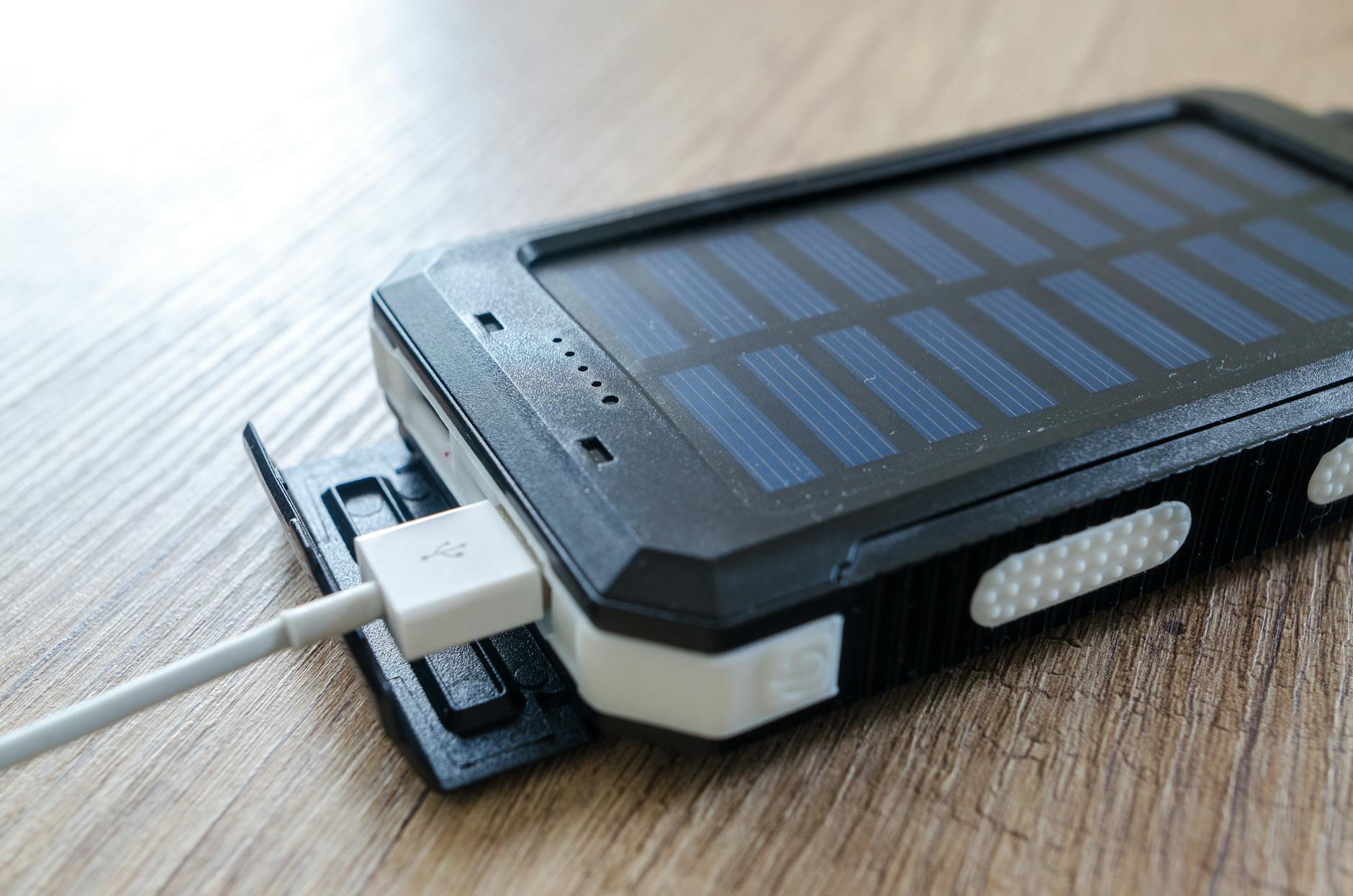
Why plug‑in solar matters for renters and roof‑limited homes
Many households cannot install traditional rooftop arrays because of tenancy agreements, listed‑building restrictions, or unsuitable roof orientation. The recent legal change allowing plug‑in solar kits removes that barrier. A typical 800 W kit fits on a balcony, windowsill or garden wall and produces about 800 kWh per year – roughly one‑fifth of the average UK household’s 3,800 kWh demand.
How the 800 W kit generates electricity
The kit consists of a series of portable photovoltaic panels that connect to a micro‑inverter. The inverter converts the DC output into AC that can be plugged directly into a standard socket. Because the system is not grid‑connected, any surplus electricity is simply unused, avoiding the need for feed‑in tariffs or export metering.
- Peak power: 800 W (approximately 20 % of an average home’s demand).
- Annual generation: ~800 kWh in the UK climate.
- Typical appliances powered simultaneously: fridge, TV, Wi‑Fi router, laptop, phone charger and a gaming console.
Translating generation into bill savings
The Department for Energy Security and Net Zero uses a retail electricity price of £0.30 /kWh for its savings model. Multiplying the 800 kWh annual output by this price yields £240 of avoided purchase. However, only the portion that replaces grid electricity – about 21 % of total consumption – translates into a realistic saving of £110 per year, after accounting for the fact that the kit cannot export surplus power.
For comparison, a fully‑rated rooftop system (2,800–3,500 kWh per year) cuts the same household’s bill by £480‑£525, according to the Microgeneration Certification Scheme (MCS). The plug‑in model therefore offers a proportionate, upfront‑cost‑free alternative for properties that cannot host a full array.
Side‑by‑side comparison
| Metric | Plug‑in (800 W) | Traditional Rooftop |
|---|---|---|
| Annual generation | ≈ 800 kWh | 2,800–3,500 kWh |
| Share of household demand | ≈ 20 % | ≈ 70‑90 % |
| Estimated annual bill reduction | £110 | £480‑£525 |
| Up‑front cost | None (retail purchase, no installation) | £3,500‑£6,000 + installation |
| Installation time | Minutes (plug‑and‑play) | 1‑2 weeks, planning & structural work |
Installation checklist for renters and landlords
Even though the kit is plug‑and‑play, compliance with UK safety standards is mandatory. Follow this short checklist before purchase:
- Confirm the tenancy agreement permits alterations to the property’s electrical fixtures.
- Obtain written consent from the landlord, freeholder or managing agent.
- Verify that the chosen location has a dedicated, properly rated socket and that the circuit breaker can handle the additional load.
- Ensure the product is certified by the Microgeneration Certification Scheme (MCS) and meets Building Regulations Part P (electrical safety) and Part L (energy performance).
- Keep the installation record for future incentive eligibility.
Regulatory landscape and future incentives
The UK’s recent amendment to the Building Regulations legalised plug‑in solar across Great Britain, but the devices must meet stricter safety criteria than comparable German products. Compliance points include:
- Electrical isolation and proper earthing.
- Certified inverters with built‑in anti‑islanding protection.
- Adherence to the Energy Saving Trust’s checklist for domestic micro‑generation.
While there is currently no feed‑in tariff for plug‑in kits, households can still benefit from broader energy‑efficiency schemes, such as the £150 Warm Home Discount and the temporary VAT reduction on energy‑saving products. Registering the system with the MCS now positions the homeowner to claim any future incentives that may arise.
Plug‑in Solar Performance Across Seasons
Solar output varies with latitude, cloud cover and panel orientation. In the UK, the average peak sun hours per day range from 2.5 h in winter to 4.5 h in summer. For an 800 W kit, this translates to a seasonal output profile that is roughly 15 % lower in December than in July. The following table summarises the expected annual generation for a typical UK location:
| Month | Average Peak Sun Hours (h) | Estimated kWh (800 W kit) |
|---|---|---|
| Jan | 2.3 | 73 |
| Feb | 2.5 | 80 |
| Mar | 3.0 | 96 |
| Apr | 3.5 | 112 |
| May | 4.0 | 128 |
| Jun | 4.5 | 144 |
| Jul | 4.8 | 154 |
| Aug | 4.3 | 138 |
| Sep | 3.6 | 115 |
| Oct | 3.0 | 96 |
| Nov | 2.4 | 77 |
| Dec | 2.1 | 68 |
These figures assume a panel tilt of 30°, typical for residential installations, and an orientation facing south. Minor adjustments in tilt or orientation can improve monthly output by 5–10 %.
Cost‑Benefit Analysis for Different Household Sizes
While the plug‑in kit is a fixed‑cost, the benefit depends on overall household consumption. The table below shows a simplified calculation of annual savings for households drawing 2,500 kWh, 3,800 kWh (average) and 5,000 kWh per year.
| Household Consumption (kWh/yr) | Plug‑in Coverage (%) | Annual Savings (£) |
|---|---|---|
| 2,500 | 32 % | ≈£75 |
| 3,800 | 21 % | ≈£110 |
| 5,000 | 16 % | ≈£85 |
These estimates use the £0.30 /kWh retail rate. If a household can negotiate a lower rate, the savings adjust proportionally.
Environmental Footprint and Net‑Zero Contribution
Generating 800 kWh of clean electricity each year offsets approximately 0.7 t of CO₂, based on the UK grid’s average emissions factor of 0.9 kg CO₂/kWh. Over five years, a plug‑in kit can avoid nearly 4 t of CO₂, comparable to planting 50 average‑sized trees.
When combined with a modest battery or with upgraded insulation, the kit’s contribution to a property’s net‑zero target grows. For instance, a 4‑kWh battery can shift 25 % of daily generation to peak periods, further reducing grid demand.
Future Incentives and Policy Outlook
The UK government has announced a review of the Small‑Scale Generation Licensing (SSGL) scheme, which could affect the cost structure for plug‑in devices. While the current policy does not allow export tariffs, the forthcoming “Micro‑Generation Grant” pilot may provide a £300 grant for qualifying households. Keeping abreast of these changes will help homeowners time their purchases.
Integration with Other Energy Measures
Solar generation becomes more valuable when paired with storage and energy‑efficiency measures. A modest battery (e.g., 4‑6 kWh) can capture surplus daylight output, allowing the home to draw on stored power during evening peaks when electricity rates rise. In parallel, upgrading loft insulation and fitting smart‑thermostatic controls reduces overall demand, magnifying the proportion of consumption covered by the solar kit.
ProNest CX’s holistic renovation packages often combine:
- Loft and cavity wall insulation (reducing heating demand by up to 30 %).
- Smart‑home energy dashboards that visualise real‑time generation vs. consumption.
- Battery storage solutions that smooth out daily generation curves.
When these measures are bundled, the effective annual saving can climb well beyond the £110 baseline, especially in homes with high electricity‑intensive appliances.
Market Momentum and What the Data Tell Us
According to MCS statistics, 150,000 certified solar installations were recorded in the first half of 2026 – a 17 % rise on the previous peak – equating to one new system every 74 seconds. Battery installations jumped 100 % year‑on‑year to 36,000 units in the same period. These trends indicate a strong appetite for combined solar‑plus‑storage retrofits, a niche where plug‑in kits can act as the first step toward a full micro‑generation ecosystem.
For property managers, the rapid rollout translates into a tangible way to improve tenant satisfaction, meet emerging ESG reporting requirements, and potentially qualify for future government‑backed energy‑efficiency grants.
Bottom Line for Homeowners
Plug‑in solar delivers a clear, quantifiable saving of up to £110 per year without the capital outlay or structural alterations required for rooftop arrays. The technology is especially suited to:
- Renters who need a reversible, non‑intrusive solution.
- Owners of flats or terraced houses with limited roof space.
- Anyone seeking an immediate step toward net‑zero while planning larger upgrades.
When combined with insulation, smart‑control systems and optional battery storage, the financial and environmental returns improve further, making plug‑in solar a practical gateway rather than a stop‑gap.
Considering plug‑in solar? A qualified installer can assess your property’s suitability, estimate realistic savings, and advise on any applicable incentives. Reach out to a trusted professional to discuss how plug‑in solar fits into your broader energy strategy.
Assessing Long‑Term Energy Savings
When investing in home upgrades, initial installation costs are only part of the equation. Homeowners must weigh upfront expenses against long‑term utility bill reductions, thermal performance gains, and potential property value increases.
Material Quality and Durability Standards
Choosing high‑performance materials—such as energy‑efficient window glazing, advanced insulation fibres, or weather‑resistant roofing—ensures structural longevity and minimises ongoing maintenance overhead.
Assessing Professional Installation vs. DIY
While minor cosmetic updates can be handled independently, major efficiency retrofits require specialised expertise. Professional installation ensures compliance with local building codes and protects manufacturer warranties.
Project Timelines and Weather Windows
Home improvement schedules vary based on project scope and seasonal conditions. Proper planning ensures that exterior renovations or weather‑proofing initiatives are completed efficiently without disrupting daily routines.
Maximising Rebates and Financing Incentives
Many regional and federal programmes offer tax credits or rebates for energy‑efficient home upgrades. Evaluating these financial incentives early can significantly offset total project costs.
Warranty Coverage and Quality Assurance
Reliable service providers back their installations with comprehensive workmanship guarantees and manufacturer warranties, providing long‑term peace of mind.


