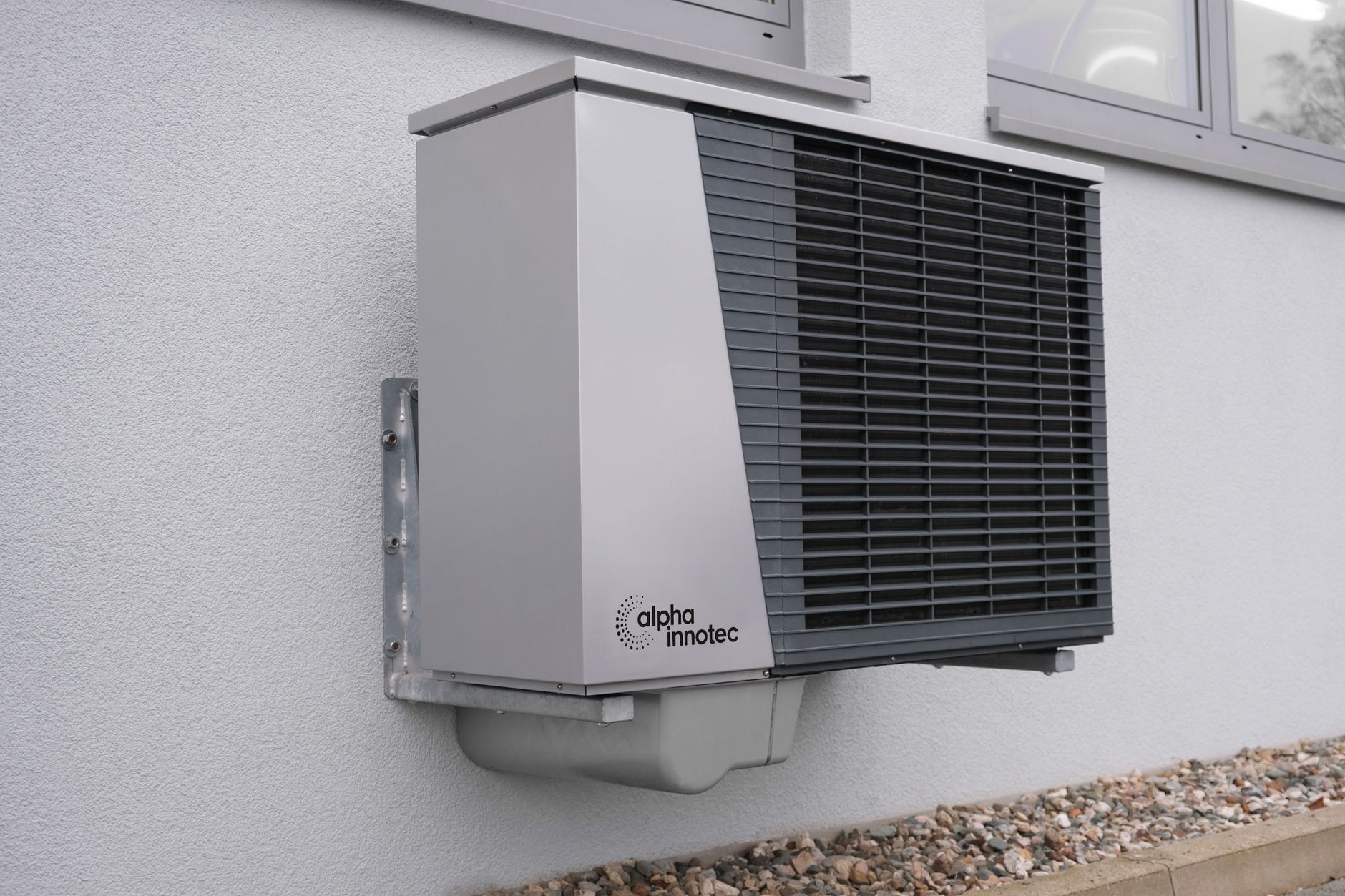
A fully installed air source heat pump typically costs around £14,000–£25,000 before incentives in the UK. That range can cover a complete heating and hot-water system, but it does not mean every property can have one installed for the same amount.
The final price depends on the heat-loss assessment, type of indoor emitter, hot-water cylinder, electrical supply, pipework, outdoor-unit location and amount of commissioning required. Grants can reduce the initial cost, while running costs depend heavily on insulation, system design and the electricity tariff.
What does an air source heat pump installation include?
A useful quotation should divide the project into identifiable items. This makes two proposals easier to compare and helps identify work that may otherwise be treated as a general installation charge.
| Quote component | What to check |
|---|---|
| Outdoor and indoor units | Manufacturer, model, dimensions, noise data, warranty and delivery details. |
| Hot-water system | Cylinder size, location, pipework, immersion heater, controls and any water-treatment requirements. |
| Heating emitters | Radiator sizes, pipe upgrades or underfloor heating designed to operate at a suitable flow temperature. |
| Electrical work | Consumer unit, dedicated circuit, RCD protection, earthing and any supply upgrades. |
| Controls and commissioning | Room or weather compensation, system commissioning, performance testing and handover documents. |
| Certification and tax | MCS certification, building-control approval where applicable, applicable VAT and scheme paperwork. |
Do not compare a basic appliance price with a full installed quote. The first may exclude the cylinder, radiators, electrical work, controls, commissioning and certification needed for reliable operation.
Why do installed heat pump costs vary?
A straightforward warm-air arrangement often costs less than a cold-water underfloor system. Existing radiators that are already large enough may reduce the need for upgrades. By contrast, replacing undersized radiators, insulating solid floors or adding pipework beneath a floor can add several thousand pounds.
Emitter sizing hinges on system flow temperature. While traditional gas boilers run with water temperatures around 65°C to 75°C (often designed around a 50°C Delta T), heat pumps reach optimal seasonal efficiency at flow temperatures between 35°C and 45°C (closer to a 30°C Delta T). Delivering identical heat outputs at lower operating temperatures requires significantly larger heat transfer surfaces, which is why Type 22 or Type 33 radiators or low-temperature fan convectors are frequently specified.
Access is another significant factor. Long pipe runs, tight boiler locations and difficult routes for cylinder drainage can increase labour. An outdoor unit also needs an appropriate position that meets manufacturer clearances, controls noise and avoids unacceptable visual impact.
Electrical capacity may limit the outdoor unit that can be installed. Even where a property has a modern consumer unit, a load-calculation check may be needed to establish whether the main supply, meter position and protective devices can support the heat pump and existing appliances. Furthermore, installers must assess grid connection requirements under Energy Networks Association (ENA) rules. Standard units often fall under Connect and Notify (G12), but larger heat pumps or constrained domestic supplies may necessitate an advance Apply to Connect application to the local Distribution Network Operator (DNO), which can affect both project timelines and connection costs.
The cost is not determined by compressor size alone. A correctly sized system depends on a proper heat-loss calculation, the required hot-water demand, local climate and the temperature at which the emitters can deliver comfortable heat.
Before sequencing several home upgrades, consider how they may affect the heat pump specification, installation cost and future energy performance. Discuss the practical considerations before finalising a project plan.
How three installation scenarios compare
The figures below are illustrative. They demonstrate how the same headline range can produce different customer prices once property upgrades and grants are considered.
| Scenario | Quoted price | After a £7,500 grant |
|---|---|---|
| Straightforward installation using suitable existing radiators, with all standard equipment and electrical work included | £18,500 | £11,000 |
| Installation requiring a larger hot-water cylinder, several replacement radiators and extended pipework | £22,000 | £14,500 |
| Cold-water underfloor system involving significant pipework, controls, emitter and possible electrical upgrades | £28,000 | £20,500 |
These examples are not quotes. A property may qualify for a different grant amount, and not every element of a particular installation will attract zero-rated VAT. Eligibility and tax treatment must be confirmed for the property and installation date.
The lowest bid can still be poor value if it omits a heat-loss assessment, suitable emitters, reliable controls or commissioning records. Conversely, the highest bid may include fabric or electrical work that the property genuinely needs, so each line requires objective review.
How much is an air source heat pump grant?
For eligible properties in England and Wales, the Boiler Upgrade Scheme currently provides £7,500 for an air source heat pump. Homes without mains gas may qualify for £10,000, subject to current scheme conditions.
Using the standard £7,500 grant, an installation priced at £18,500 would leave a customer cost of £11,000 before any locally funded top-up. At the top of the typical pre-incentive range, a £25,000 installation would leave £17,500.
Scheme funding generally requires an eligible property and installation by an MCS-certified provider. Other conditions relating to the property, energy performance certificate and replacement technology may apply. Scotland and Northern Ireland operate separate support schemes, so householders should check the rules for their nation rather than assume the England and Wales figures apply.
Qualifying domestic energy-saving installations in England and Wales can currently benefit from zero-rated VAT until 31 March 2027. This is a tax treatment, not a grant or an automatic discount on labour. The installer should confirm whether the proposed products and services meet the relevant conditions.
What will a heat pump cost to run?
Heat pumps can cost less to run than gas or oil heating, but the saving is not automatic. The Energy Saving Trust estimates potential annual savings of around £500 for a suitable home replacing a gas- or oil-heated system. Actual results depend on tariffs, insulation, heat demand, hot-water use and system performance.
Efficiency is best considered using the seasonal performance factor, or SCOP. SCOP represents useful heat delivered over a season divided by the electricity consumed. Illustratively, a system with a SCOP of 3 uses about 1 kWh of electricity for every 3 kWh of useful heat.
At an electricity price of £0.27 per kWh, the energy cost would be approximately 9p per kWh of useful heat:
- 3 kWh of useful heat delivered;
- divided by a SCOP of 3;
- 1 kWh of electricity used;
- multiplied by £0.27, giving 27p;
- divided by 3, giving 9p.
This calculation excludes standing charges and assumes the stated tariff. It is not a direct boiler comparison because a gas boiler also has fuel costs and standing charges. A property using more electricity throughout the day may also achieve a better effective rate if its tariff rewards that usage.
System performance also fluctuates across the heating calendar. In milder autumn and spring periods, external ambient air holds more thermal energy, allowing a heat pump to operate at an instantaneous Coefficient of Performance (COP) of 3.5 to 4.2. In prolonged sub-zero conditions, air-to-refrigerant heat transfer drops and defrost cycles activate periodically, lowering the instantaneous COP towards 2.2 to 2.6. A well-modelled SCOP takes these seasonal swings into account across typical annual temperatures.
If a heat pump saved £500 in its first year, the simple payback on an £11,000 post-grant installation would be 22 years. This ignores maintenance, tariff changes and future price movements. The investment case should therefore include comfort, carbon reduction, resilience and the condition of the existing boiler, not bills alone.
How to compare quotations properly
Request at least three itemised quotations from MCS-certified providers and use the same questions for each one. Each proposal should be checked for the following points:
- Heat-loss calculation: Confirm that heat demand has been assessed rather than estimating from floor area alone.
- Equipment: Record the outdoor and indoor models, cylinder capacity, emitter specifications and warranty periods.
- Emitters: Establish whether existing radiators can deliver the required output at a workable water temperature.
- Electrical work: Identify any consumer-unit, circuit, earthing or supply changes included in the price.
- Controls: Ask for the proposed control strategy and whether it can respond to indoor and outdoor conditions.
- Running-cost model: Request realistic consumption estimates based on the property and selected tariff.
- Location: Review outdoor-unit noise, clearance, visual impact and maintenance access.
- Commissioning: Check for an MCS certificate, test results, operating guidance and details of the warranty provider.
- Aftercare: Confirm the first service, response times, spare-parts route, refrigerant availability and expected system lifespan.
Unsure which property upgrades could support a lower-temperature heating system? Consider discussing the practical considerations before finalising a specification.
Can an air source heat pump suit any home?
A heat pump is most practical when the property has moderate heat loss, suitable radiators or underfloor emitters, adequate electrical capacity and reliable outdoor-unit placement. It is particularly relevant when a gas or oil boiler is approaching replacement, because retaining or repairing the existing system may involve separate future costs.
Cold homes may need insulation or larger emitters before a heat pump can perform efficiently. These upgrades can increase the initial price, but they may also improve comfort, reduce the required flow temperature and lower long-term energy demand. They should be justified through modelling rather than added automatically.
High flow temperatures, poorly sized radiators and excessive hot-water demand can reduce performance. Repeated cycling, unexpected noise and poor commissioning can also affect comfort. A technically designed system is therefore more important than choosing a larger compressor for every problem.
Property managers should also plan for servicing, maintain access for maintenance and monitor actual performance after handover. Annual servicing generally costs £150–£250 and includes cleaning the outdoor evaporator fins, inspecting anti-freeze glycol concentrations, testing expansion vessel pressures and verifying sensor calibrations. A heat pump is a long-term asset, so its controls, refrigerant circuit and heat emitters need ongoing routine care.
What determines whole-life value?
The cheapest installation is not necessarily the cheapest heat pump to own. Consider the heat-loss assessment, expected SCOP, equipment warranty, service arrangements, emitter design and likelihood of future upgrades together. Ask the installer to explain the assumptions behind its efficiency and running-cost estimates.
A complete quotation should also state the MCS certificate, applicable VAT and any assumed electrical or building-control work. Unclear exclusions are likely to become extra costs later. A transparent scope allows grants to be assessed accurately and makes contractor proposals meaningfully comparable.
In summary, expect to pay about £14,000–£25,000 before incentives for a typical MCS-installed system, with property-specific projects costing more. An England and Wales grant may reduce £18,500 to £11,000, but a well-designed system is just as important as the discount. Compare at least three complete quotations, test the running-cost assumptions and plan for maintenance before making a final decision.
Considering an air source heat pump for your home? Consider seeking independent advice on project scope, property suitability and upgrade planning before making a decision.


