Heating costs can rise even when energy use does not. The Ofgem price cap for a typical English household is currently £1,758 per year, after a 0.2% increase. Reducing the amount of heat that escapes, improving how the system operates, and making targeted upgrades are practical ways to improve heating efficiency and control household energy spending.
The most effective approach is usually staged. Begin with measures that cost little or nothing, then invest in improvements where the condition of the home, the heating system, or the occupants’ needs justify them. This helps homeowners avoid expensive work before they know which measures will have the greatest effect.
1. Seal the draughts that waste heat
Air leaks around skirting boards, letterboxes, windows, doors, and light fittings can allow heated air to escape. Sealing these gaps is one of the most effective low-cost steps available to homeowners. It improves comfort by reducing cold patches and helps the heating system reach the set temperature with less energy.
Start with a visual inspection and, where appropriate, a simple smoke test to identify moving air. Apply suitable draught excluders or sealant to gaps around skirting boards, but do not block deliberate ventilation points or interfere with the safe operation of an open-flued gas appliance. Gaps around letterboxes, keyholes, and window frames should be treated with weatherstripping or brush strips designed specifically for those locations. Even sealing internal draught pathways, such as gaps around floorboards or around loft hatches using compression seals, prevents the stack effect from drawing warm air up into unheated roof spaces.
Check doors and windows for structural air leaks before considering total replacement. Persistent draughts, condensation within double-glazed units, or rotted timber frames may indicate that a repair or a higher-performance glazing upgrade would be more suitable than a temporary surface seal. Properly draught-proofing windows and exterior doors can save around £45 to £60 annually in a typical semi-detached home while noticeably reducing air permeability.
Homeowners comparing repair options with longer-term glazing improvements can review our windows, doors, and glazing guidance to assess thermal performance before deciding.
2. Set the thermostat deliberately and optimize flow temperature
Adjusting temperature controls correctly is one of the most direct ways to lower fuel consumption. Lowering the central room thermostat by just 1°C can save up to £73 per year for a typical property. For most occupied spaces, an ambient room temperature between 18°C and 21°C provides a balance of comfort and energy economy. However, households with young children, elderly family members, or individuals with chronic health conditions should avoid letting living areas drop below 18°C.
It is equally important to distinguish between room temperature and condensing boiler flow temperature. Many modern combi boilers are left at factory default flow settings of 70°C to 80°C. Lowering the central heating flow temperature on a combi boiler to around 55°C to 60°C allows the unit to operate in true condensing mode. In this range, water vapour in the flue gases condenses, recovering latent heat that would otherwise escape outside, improving net efficiency by 6% to 12%. While radiators will feel warm rather than scalding hot, the boiler operates at peak operational efficiency.
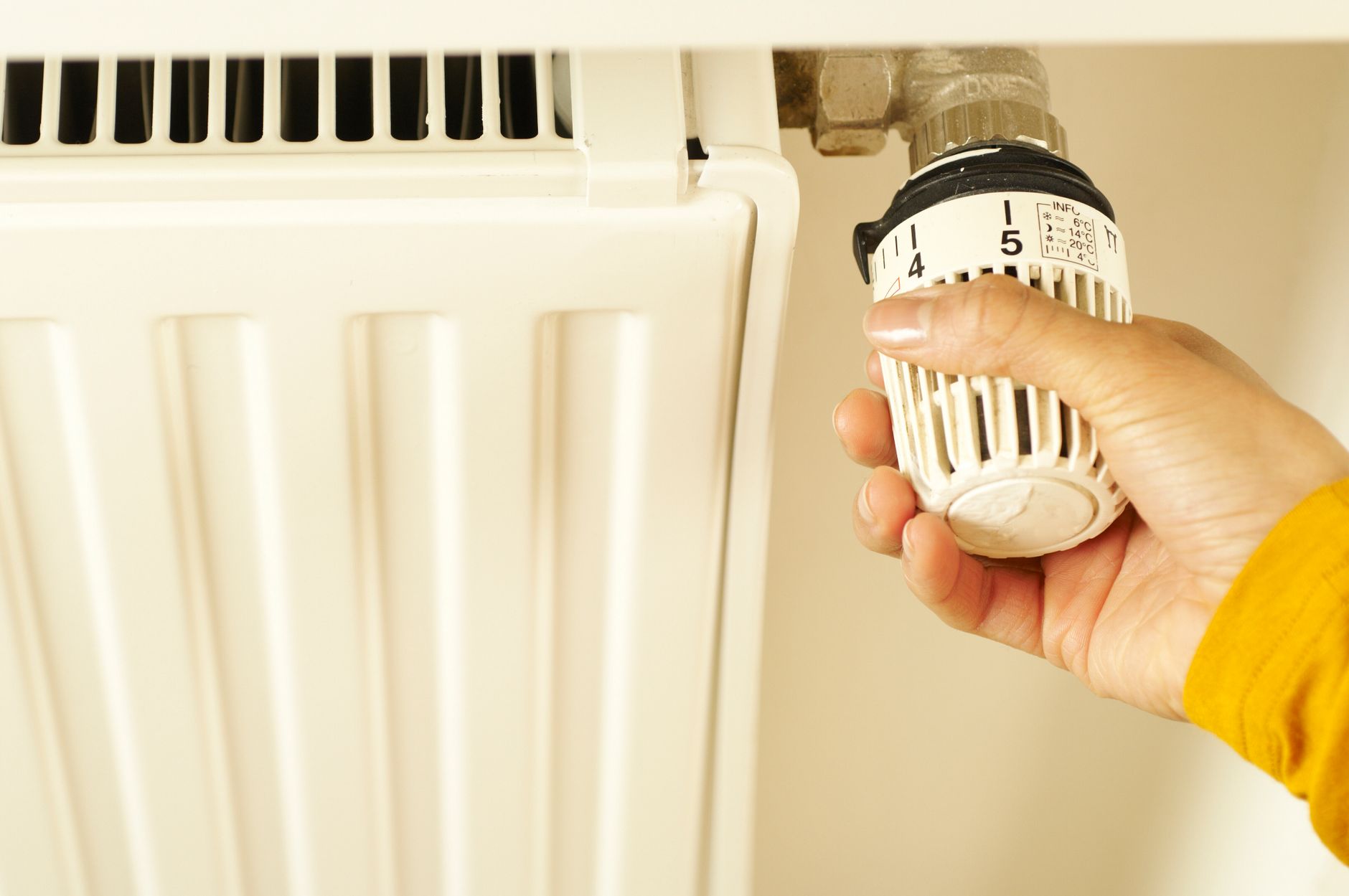
Modern programmable or smart thermostats enable precise zoning and scheduling. Instead of heating the entire house continuously, create automated profiles that match household routines. Schedule lower setback temperatures overnight (around 15°C–16°C) and moderate heating in the morning. When combined with thermostatic radiator valves (TRVs) on individual radiators, bedrooms and rarely used dining spaces can be kept cooler without starving high-use living rooms of heat.
Setting TRVs correctly is essential: set living areas to position 3 or 4 (roughly 20°C) and unheated spare rooms or storage spaces to position 1 or 2 (around 12°C–15°C). Remember that the room housing the primary wall thermostat should not have an active TRV installed, or the TRV should remain fully open (position 5), to prevent the two control mechanisms from competing with one another.
3. Service and insulate the boiler and pipework
Boiler maintenance supports heating efficiency, operational safety, and system longevity. Arrange an annual service with a certified Gas Safe engineer in line with manufacturer specifications. During an inspection, the engineer checks key components including the heat exchanger, burner pressure, flue integrity, pump operation, and expansion vessel to verify that combustion is clean and safe.
Hot water cylinder management requires strict attention to thermal safety and hygiene. For systems with a hot water cylinder, water must be stored at a minimum of 60°C to kill and prevent the proliferation of Legionella bacteria. Storing hot water below 60°C increases the risk of bacterial contamination. To prevent accidental scalding at the tap, thermostatic mixing valves (TMVs) can be fitted to regulate delivery temperatures safely while keeping storage temperatures compliant.
External insulation around exposed central heating pipework and hot water storage delivers reliable ongoing savings. Insulating primary pipework in unheated spaces—such as basements, garages, and loft voids—reduces parasitic heat loss before the hot water ever reaches the radiators. Fitting closed-cell polyethylene pipe lagging typically costs under £20 for materials and can pay back within a single heating season. Adding a compliant 80 mm insulating jacket to an older uninsulated hot water cylinder can save upwards of £180 per year in standby heat loss.
Regular servicing can also identify internal corrosion, sludge accumulation, or failing circulating pumps before a catastrophic breakdown occurs. If an existing boiler is non-condensing or more than 15 years old, consider upgrading to a high-efficiency condensing boiler or reviewing low-carbon alternatives such as hydronic heat pumps. Heat pumps require lower design flow temperatures (35°C to 45°C) to achieve a high seasonal coefficient of performance (SCOP), making thermal pipework insulation and radiator sizing critical prerequisites.
4. Bleed and balance the radiators
Trapped air inside central heating pipework and radiators creates airlocks that leave the top section of radiators cold while the bottom remains warm. This uneven heat distribution forces the boiler to run longer cycles to satisfy the central thermostat. Bleeding radiators releases trapped air and restores full radiator surface area for heat emission.
To bleed radiators, switch the heating off and let the system cool down so pressurised hot water does not escape. Insert a radiator key into the bleed valve at the top corner, turning it counterclockwise until a gentle hiss of escaping air is heard. As soon as a steady trickle of water appears, close the valve firmly. After bleeding multiple radiators, check the boiler pressure gauge; sealed combi systems usually require a top-up back to between 1.0 and 1.5 bar using the internal filling loop.
If radiators heat unevenly across different rooms—where radiators closest to the boiler get hot immediately while distant units remain lukewarm—the system may require hydraulic balancing. Balancing involves adjusting the lockshield valve at the return end of each radiator to ensure an even distribution of water flow across the entire pipe network.
To balance the system effectively, turn off the heating and let all emitters cool. Remove the plastic caps from the lockshield valves and open all lockshields fully. Once the heating is switched back on, document the order in which each radiator warms up. Starting with the first and warmest radiator closest to the boiler, close the lockshield completely and open it only a fraction (typically a quarter to a half turn). Measure the temperature differential across the flow and return pipes using a digital contact thermometer, aiming for an approximate 12°C drop on conventional boilers. Move systematically to the furthest radiator, leaving its lockshield valve wide open. Proper balancing eliminates hot spots and lowers boiler return temperatures.
5. Improve insulation before upgrading the system
Insulation forms the thermal envelope that retains warmth, directly reducing the kilowatt-hour demand placed on your heating equipment. Upgrading insulation before replacing a heating appliance ensures that any new boiler or heat pump can be accurately sized to the building's true thermal requirements rather than oversized to compensate for preventable heat loss.
Loft insulation is one of the most cost-effective retrofit interventions. While older standards recommended shallower coverage, modern thermal standards recommend a total mineral wool depth of 270 mm to 400 mm (approximately 15.7 inches or 39.8 cm). Topping up loft insulation from 100 mm to 270 mm typically costs between £400 and £600 for a standard semi-detached home, yielding yearly fuel bill savings of around £30 to £40 with a typical payback period of under two to three years. When installing rolls across ceiling joists, ensure the material is laid loosely without compression, as trapped air pockets provide the actual insulating value. Maintain adequate perimeter eaves ventilation to avoid condensation buildup and dampness in roof timbers.
Wall and floor insulation address remaining pathways of significant thermal transfer. Cavity wall insulation can save around £280 to £390 per year in uninsulated detached or semi-detached properties, often paying for itself within five years. External solid wall cladding and suspended timber floor insulation drastically reduce heat loss coefficients (U-values). An energy performance audit can prioritize which building fabric elements present the greatest return on investment.
For households comparing projects, our loft and home insulation advice explains how to assess coverage, materials, ventilation, and building requirements.
6. Use reflective panels and optimize radiator heat emission
Radiators positioned against uninsulated exterior walls radiate a substantial portion of their thermal energy directly into the masonry, which conducts that heat outdoors. Placing radiator reflector foil panels behind external-wall radiators bounces infrared radiation back into the living space, improving room warm-up times.
Reflector panels should be fitted flush behind the radiator with adequate clearance so convection currents are not obstructed. Ensure that heavy furniture, long curtains, and decorative radiator covers do not box in the emitter. Radiator covers in particular restrict natural buoyancy-driven convection, increasing system return temperatures and causing the boiler to cycle prematurely.
Additionally, vacuuming dust and lint from radiator fins twice a year restores unobstructed airflow through the internal convectors. A clean convector radiator transfers heat into the room air up to 10% more efficiently than a dust-clogged unit, helping the thermostat reach its setpoint without extending boiler firing cycles.
7. Manage tariffs and indoor humidity
Operating a heating system efficiently goes hand in hand with smart energy management. Compare standard variable tariffs against fixed or time-of-use tariffs that reward shifting flexible electrical demand to off-peak periods. Regularly evaluate unit rates, standing charges, and exit terms against actual household consumption records.
Managing indoor air moisture is equally critical for thermal efficiency. Humid air feels clammier, requires more energy to heat, and encourages mould growth on cold thermal bridges. Running a portable compressor dehumidifier during winter drying rather than draping wet washing directly over radiators maintains indoor air quality and allows the heating system to warm the air mass more effectively. Using extractor fans in kitchens and bathrooms and keeping relative indoor humidity between 40% and 60% optimizes both thermal comfort and structural protection.
8. Check support available in your area
A range of statutory support programs and local grants exist to assist households with energy upgrades. The Warm Home Discount provides an annual rebate on electricity bills for eligible low-income households. The Winter Fuel Payment offers targeted financial support to eligible pension-age citizens, and Cold Weather Payments trigger automatic contributions during prolonged spells of sub-zero temperatures.
For capital upgrades, schemes such as the Energy Company Obligation (ECO4) and the Great British Insulation Scheme (GBIS) provide subsidized or free cavity wall and loft insulation for qualifying properties with poor Energy Performance Certificate (EPC) ratings. In regional jurisdictions, programs such as Retrofit West offer technical assessments and guidance to help property owners plan comprehensive thermal retrofits.
| Measure | Typical cost or effort | Best time to consider it |
|---|---|---|
| Draught sealing | Low cost; weekend DIY task | Autumn, prior to the heating season |
| Flow & room thermostat adjustment | Zero capital outlay | Immediately, optimizing comfort and condensing efficiency |
| Radiator bleeding & balancing | Low cost; basic homeowner maintenance | When radiators display cold tops or heat unevenly |
| Boiler servicing & cylinder insulation | Professional service fee plus minor material cost | Annually, ideally before winter peak demand |
| Loft & wall insulation retrofits | Medium to high capital investment | Planned retrofit phase to lock in long-term building envelope savings |
A sensible order of work
Begin by eliminating obvious air infiltration points, reviewing room thermostat schedules, and adjusting boiler flow temperatures. Follow this by bleeding radiators and booking an annual boiler inspection to verify combustion safety and cylinder temperature compliance. Once baseline operational measures are optimized, assess building fabric upgrades such as loft topping-up, wall insulation, and high-performance glazing.
By approaching heating efficiency systematically—starting with no-cost controls, moving through maintenance, and finishing with fabric insulation—households can meaningfully reduce fuel usage while maintaining a healthy, warm indoor environment.
Exploring insulation or heating options for your home? Contact our advisory team for neutral guidance on thermal performance and retrofit planning.


