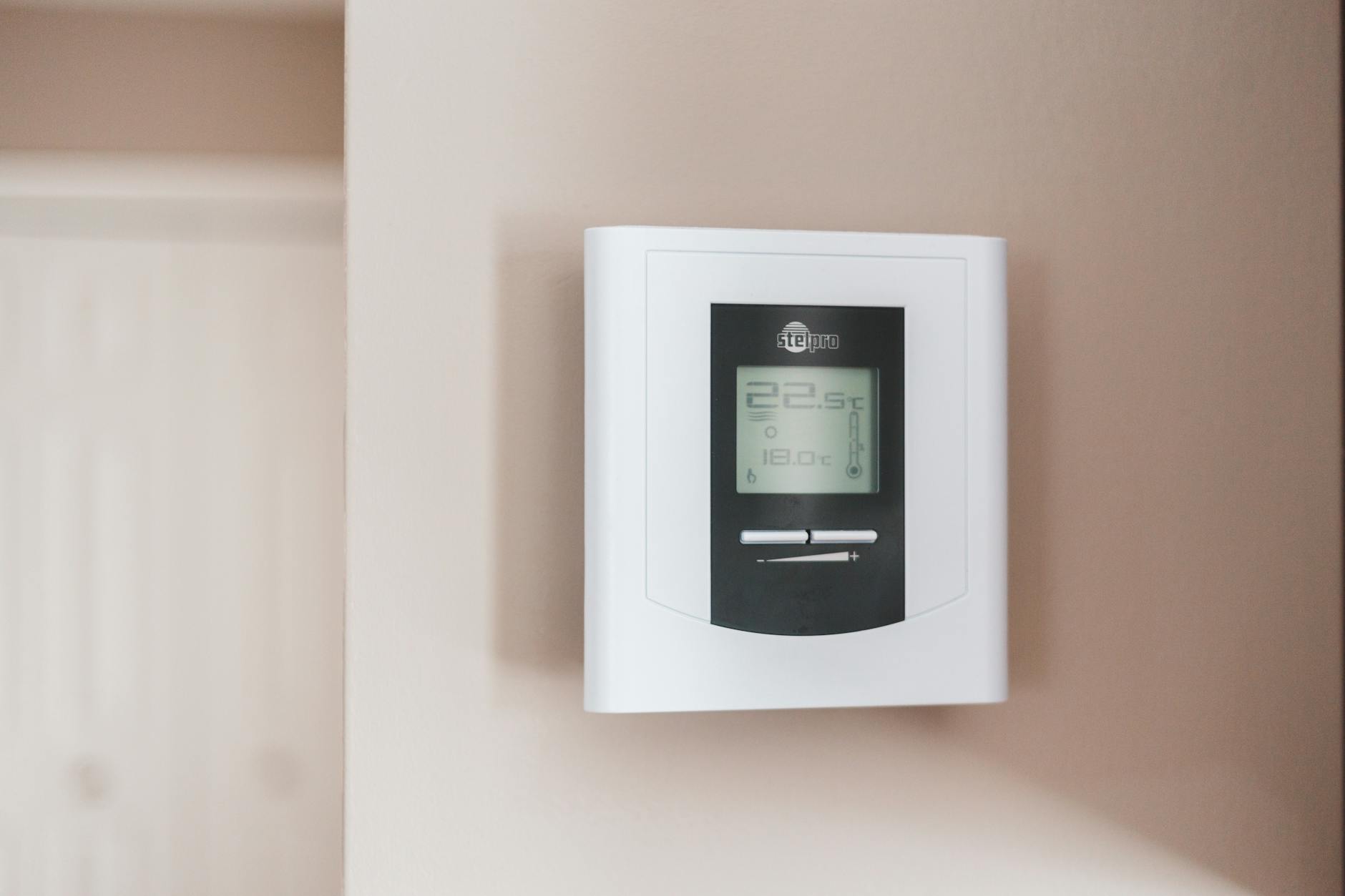
Smart thermostats have been widely available for over a decade and are widely regarded as a worthwhile upgrade for many heating and cooling systems. According to Consumer Reports, smart thermostats that meet Energy Star criteria can save users an average of 8% on their utility bills, which translates to potential annual savings of $50 or more depending on location and energy costs.
The savings come from the thermostat's ability to turn down the heat and AC more often than regular thermostats without sacrificing comfort. Features like motion sensors, geo-fencing, and app-based scheduling help optimize energy use, particularly when homes are unoccupied.
Key Benefits of Smart Thermostats
Smart thermostats offer several benefits that can enhance your home's energy efficiency and comfort:
- Energy Savings: Energy Star smart thermostats can save an average of 8% on utility bills, leading to potential annual savings of $50 or more.
- Remote Control: Manage your thermostat from anywhere using a smartphone app, allowing you to adjust settings even when you're not home.
- Smart Scheduling: Features like motion sensors and geo-fencing help optimize energy use by adjusting settings based on occupancy.
- Integration: Many smart thermostats can integrate with other smart home devices, creating a more connected and efficient home environment.
Considerations Before Installing a Smart Thermostat
While smart thermostats offer numerous benefits, there are some considerations to keep in mind:
- Compatibility: Smart thermostats may not work well with older HVAC systems lacking a C-wire or with electric baseboard radiators.
- Initial Cost: Smart thermostats can be more expensive upfront compared to traditional programmable thermostats.
- Climate: In temperate climates, the energy savings may be less significant compared to colder or hotter regions.
- Programmable Thermostats: If you already have a programmable thermostat, you might not see significant savings unless you're not utilizing its scheduling features effectively.
How to Choose the Right Smart Thermostat
Selecting the right smart thermostat involves considering several factors:
- Compatibility: Ensure the thermostat is compatible with your HVAC system. Consult with an HVAC professional if you're unsure.
- Features: Decide which features are most important to you, such as remote control, smart scheduling, and integration capabilities.
- Budget: Consider both the upfront cost and potential long-term savings when choosing a smart thermostat.
- Reviews: Read reviews and compare different models to find the best fit for your needs.
Smart Thermostat Savings and Rebates
Smart thermostats can qualify for energy rebates or tax credits in some regions. Homeowners should check local utility programs and consult with HVAC professionals to ensure compatibility with existing systems.
| Feature | Description |
|---|---|
| Energy Savings | Average of 8% on utility bills, leading to potential annual savings of $50 or more. |
| Remote Control | Manage your thermostat from anywhere using a smartphone app. |
| Smart Scheduling | Features like motion sensors and geo-fencing help optimize energy use. |
| Integration | Many smart thermostats can integrate with other smart home devices. |
Looking to improve your home's energy efficiency? For tailored guidance on your heating and cooling equipment, contact our advisory team to discuss compatible upgrades and optimal configuration settings.
Understanding the Common Wire (C-Wire) Requirement
One of the most frequent technical stumbling blocks when installing a smart thermostat is the presence of a continuous power source, widely referred to as the common wire or C-wire. Traditional manual and basic programmable thermostats typically operate using standard dry contact switching powered by internal AA or AAA batteries, or by sipping minimal current directly from heating control circuits.
In contrast, modern Wi-Fi connected thermostats feature vibrant back-lit displays, continuous wireless radios, and onboard processors that demand steady low-voltage power (typically 24 VAC). If an existing wall installation contains only two or four wires—often labeled R, W, Y, and G—a dedicated C-wire may be missing. Installing a modern device without one can lead to intermittent Wi-Fi drops, short-cycling of the furnace, or battery drain.
Homeowners faced with missing C-wires have three primary alternatives:
- Power Extender Kits (PEK): Many leading manufacturers include an add-a-wire adapter in the box, which can be mounted at the air handler or furnace control board to send power over existing wiring.
- C-Wire Transformers: For setups where wall cavity access is straightforward, an external plug-in 24-volt transformer can be routed to the subbase terminals.
- Running New Thermostat Cable: Pulling a fresh 18/5 or 18/8 multi-conductor wire provides room for future heating stages, heat pump reversing valves, and dedicated power lines.
Low-Voltage vs. Line-Voltage Heating Systems
Before purchasing any smart thermostat hardware, it is critical to confirm the electrical voltage of your home's heating infrastructure. Over 90% of central heating and air conditioning systems in North America and modern European builds run on low-voltage (24 VAC) control loops. Standard models from popular consumer brands are designed exclusively for these low-voltage circuits.
Conversely, homes heated by electric baseboard heaters, radiant ceiling cable heat, or direct electric convector units use high-voltage (120V or 240V) line-voltage circuits. Connecting a low-voltage smart thermostat directly to a line-voltage circuit presents an immediate fire and shock hazard and will permanently destroy the device. Homeowners with line-voltage baseboards must instead specify specialized high-voltage smart thermostats engineered specifically for resistive heating loads.
Smart Home Ecosystem Integration
Smart thermostats serve as central components of connected home automation architectures. When selecting a unit, evaluate how cleanly it interfaces with your prevailing ecosystem:
- Apple HomeKit: Allows automated temperature setbacks based on household departure triggers recorded through linked iOS devices, as well as Siri voice control.
- Google Home: Integrates seamlessly with Nest hardware and third-party compatible devices, using ambient sensing and Google Assistant voice interactions.
- Amazon Alexa: Enables spoken temperature adjustments and routine-driven temperature setbacks coordinated with smart lighting or smart door locks.
- Matter and Thread Support: Newer generation thermostats increasingly embrace open standards, ensuring cross-platform stability and direct local network communication without external cloud dependencies.
Return on Investment (ROI) and Payback Timeline
Evaluating whether a smart thermostat is financially worth the expense requires balancing the total acquisition cost against calculated utility savings. The average retail price of a certified smart thermostat spans between $120 and $250. Factoring in potential utility rebates—which frequently range from $30 to $100 depending on your regional power company—the net hardware investment can drop substantially.
For a household spending $1,400 to $2,000 annually on combined heating and cooling utility costs, an 8% reduction yields between $112 and $160 in recurring annual savings. Under average operational conditions, most homeowners recover their initial hardware outlay within 12 to 24 months. Beyond financial return, the ability to monitor indoor temperatures remotely helps avoid frozen pipes during winter vacations and alerts homeowners to mechanical failures before interior spaces suffer temperature extremes.
DIY vs. Professional HVAC Installation
Most smart thermostat kits are designed for straightforward DIY installation, including step-by-step mobile setup guides, labeled terminal stickers, and built-in bubble levels. However, homeowners should consider calling an HVAC technician if any of the following apply:
- The existing control board contains complex multi-stage heat pump wiring with emergency or auxiliary heat strips.
- The installation involves whole-home humidifiers, dehumidifiers, or energy recovery ventilators (ERVs) managed through the central thermostat interface.
- The current wall opening reveals thick, unlabelled high-voltage wires without a dedicated electrical junction box.
- The furnace control board lacks clearly labeled screw terminals, making adapter kit wiring uncertain.
By assessing wiring compatibility, reviewing utility incentive programs, and selecting a model tailored to your HVAC architecture, installing a smart thermostat offers a dependable pathway toward consistent indoor comfort and reduced energy waste.


