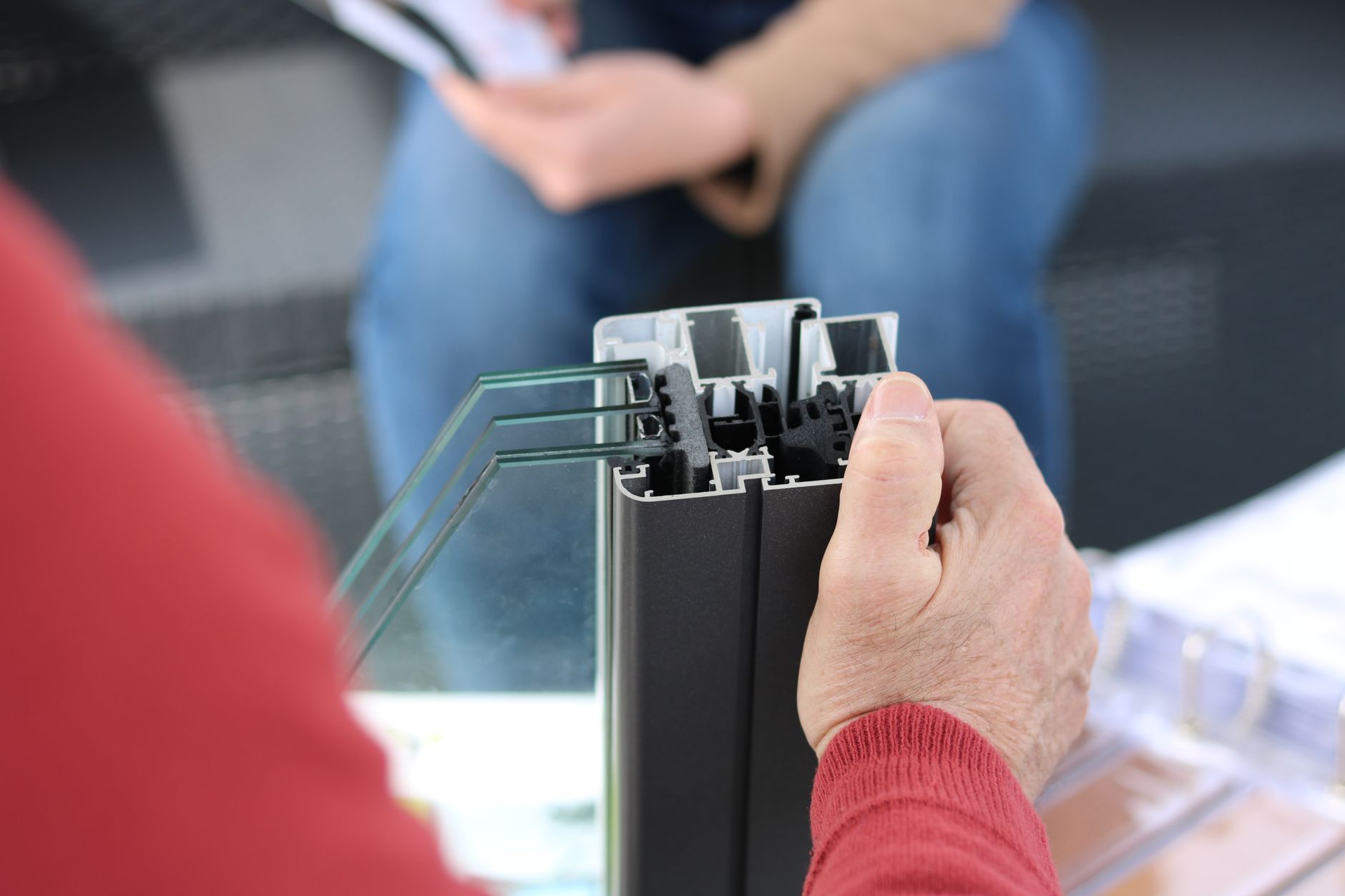
Double glazing remains one of the most prominent capital improvements considered by UK homeowners seeking to curb heat loss, lower annual utility expenditure, and improve internal comfort. According to data from the Energy Saving Trust and Which? Trusted Traders, replacing inefficient single-glazed timber units with modern A-rated double glazing can save between £110 and £195 annually on heating costs in a typical detached property, and around £60 to £85 per year in a mid-terraced home. However, determining whether double glazing is strictly "worth it" involves analyzing total capital expenditure, acoustic mitigation, building regulation compliance, and the thermal mechanics of modern insulated glazing units (IGUs).
The operational effectiveness of double glazing depends fundamentally on specification quality, unit construction, and precise installation tolerances. Fenestration experts emphasize that a properly installed, airtight frame with an average specification will consistently outperform a poorly fitted unit with a nominally superior rating. In the UK, the British Fenestration Rating Council (BFRC) certifies window thermal performance using an A++ to G scale, factoring in the overall window U-value, solar heat gain coefficient (g-value), and air leakage rates (L-value).
Homeowners must also consider ventilation performance, especially when replacing over 30% of a dwelling's existing glazing apertures. Replacing leaky, draughty frames significantly reduces passive air exchange, which can exacerbate internal moisture, surface condensation, and mould growth if unmanaged. Approved Document F of the UK Building Regulations requires adequate replacement ventilation, routinely satisfied via integrated trickle vents, passive trickle air bricks, or decentralised mechanical extract ventilation systems.
Security is an additional key justification for upgrading. Older single-paned or early-generation aluminium frames often lack multi-point locking or internally beaded glazing. Contemporary double-glazed casement and sash profiles incorporate internal beading (preventing external pane removal), multipoint shootbolt mechanisms, and toughened or laminated security glass compliant with the PAS 24 standard, commonly satisfying insurer requirements and Secured by Design criteria.
| Benefit Category | Key Technical Metric | Typical Performance Impact |
|---|---|---|
| Energy & Cost Savings | Up to £195/year (Detached) / £60–£85/year (Terraced) | Reduces overall dwelling transmission heat loss through apertures by up to 50% |
| Thermal Insulation | Target U-value ≤ 1.4 W/m²K (UK Part L Standard) | Eliminates internal cold draughts, radiative chill zones, and internal frame condensation |
| Acoustic Attenuation | Rw Sound Reduction Index (32 dB to 40 dB) | Dampens ambient airborne traffic and urban high-frequency noise pollution |
| Structural Security | PAS 24 & BS 7950 Compliance | Multi-point espagnolette locking, internal glazing beads, and impact-resistant laminates |
Understanding U-Values and Glass Technology
A window's thermal efficacy is formally measured by its U-value, which quantifies the rate of heat transfer through a structure in watts per square metre per Kelvin (W/m²K). A standard single-glazed pane operates with a relatively poor U-value of roughly 5.0 to 5.8 W/m²K. In contrast, modern Building Regulations (Approved Document L1B in England and Wales) require replacement windows to achieve a whole-window U-value (Uw) of 1.4 W/m²K or better, or a minimum BFRC Window Energy Rating of band B.
Achieving these benchmark ratings relies on three key technical components within the Insulated Glazing Unit:
- Low-Emissivity (Low-E) Coatings: Microscopic, transparent metallic oxide layers applied to internal pane faces that reflect long-wave infrared heat back into living spaces while allowing natural solar light through.
- Inert Gas Cavity Filling: Substituting standard dry air with inert gases—primarily Argon, or Krypton in high-performance or narrow-cavity profiles—which possess substantially lower thermal conductivity than air and reduce convective currents between the glass panes.
- Warm-Edge Spacer Bars: Replacing traditional extruded aluminium perimeter spacers with composite, low-conductivity polymer spacer bars lined with desiccant, which prevents thermal bridging and condensation along the edge of the glass.
Acoustic Insulation: How Double Glazing Reduces Noise
Noise pollution from major roads, flight paths, and pedestrian areas presents a major quality-of-life issue for many households. Standard double glazing—typically composed of two 4mm panes separated by a 16mm or 20mm cavity (4-16-4 or 4-20-4 configuration)—generally achieves an acoustic sound reduction rating of approximately 30 to 32 decibels (dB). However, identical pane thicknesses can lead to resonance issues, where both panes vibrate at the same resonant frequency, transmitting low-frequency traffic rumble directly into the interior.
To maximise sound reduction, homeowners can specify asymmetrical double glazing or specialist acoustic laminates. By using different pane thicknesses (such as a 6mm outer pane coupled with a 4mm inner pane), the two layers vibrate at differing harmonic frequencies, breaking up the sound wave profile. Adding an acoustic polyvinyl butyral (PVB) interlayer within laminated glass dampens sound waves further, delivering noise reductions of up to 38–42 dB. Homeowners should note that the frame assembly, brush seals, and trickle vents must also feature acoustic baffling; an unsealed gap around an opening sash will severely degrade the acoustic rating of the unit.
Capital Expenditure, Return on Investment, and Payback Periods
From a purely financial perspective, the simple payback period of double glazing is relatively extended compared to loft insulation or draught-proofing. Upgrading an entire three-bedroom semi-detached home (typically 8 to 10 windows) with standard white unplasticized polyvinyl chloride (uPVC) frames typically costs between £4,500 and £8,500, depending on hardware, opening configurations, and site access. If timber or architectural aluminium profiles are chosen, overall costs can increase to £10,000–£18,000.
With annual energy bill savings averaging between £100 and £195 per year depending on the fuel source (mains gas vs. electric heating), the direct payback timeline through fuel savings alone ranges from 20 to 35 years. Consequently, double glazing should not be viewed strictly as a rapid financial return mechanism. Instead, its return on investment encompasses broader value drivers: immediate reductions in carbon emissions, improved Energy Performance Certificate (EPC) ratings (which increasingly influence property valuations and lettability under Minimum Energy Efficiency Standards), lower routine maintenance costs, and a significant improvement in ambient indoor temperature stability.
UK Building Regulations, FENSA Certification, and Support Schemes
In England and Wales, replacing external windows is classified as a controlled service under the Building Regulations. Installers must either be registered with a government-authorised Competent Person Scheme—such as FENSA (Fenestration Self-Assessment Scheme) or Certass—or the installation must be formally approved by the local authority Building Control department. A FENSA or Certass certificate confirms that the replacement windows satisfy requirements for thermal performance, fire safety egress, safety glass placement (within 800mm of the floor), and adequate background ventilation. This documentation is essential when selling the property.
While broad national grants for glazing are limited, eligible UK homeowners may explore targeted assistance schemes:
- Energy Company Obligation (ECO4): Major energy suppliers are obligated to fund energy efficiency retrofits for low-income and vulnerable households, which can include window upgrades where single glazing is failing.
- Home Energy Scotland: Scottish residents may access interest-free loans and grants for energy efficiency measures, subject to local eligibility criteria.
- VAT Reductions on Energy-Saving Materials: The UK government introduced a temporary zero-rate VAT relief on specific energy-saving retrofits; although standalone replacement windows do not automatically qualify, installations carried out as part of comprehensive heat retention schemes should be reviewed with certified contractors.
Frequently Asked Questions
How long do double-glazed units typically last before failing?
Modern sealed units have an expected operational lifespan of 20 to 25 years. Failure occurs when the perimeter seal degrades, allowing atmospheric moisture into the gas cavity, which appears as permanent misting or condensation between the panes. In most cases, blown sealed units can be deglazed and replaced without needing to change the structural window frame.
Is triple glazing worth the additional expense over double glazing?
Triple glazing reduces U-values from around 1.4 W/m²K down to 0.8–1.0 W/m²K, which is particularly beneficial in exposed rural environments or for low-energy Passivhaus developments. However, triple glazing carries a 20% to 40% cost premium over high-grade double glazing and adds substantial structural weight to hinges and wall anchors. For the majority of standard UK residential retrofits, A-rated or A+-rated double glazing provides the most practical balance of cost, thermal retention, and structural load.
Can I install double glazing in a listed building or conservation area?
Properties in conservation areas, or those carrying Grade I or Grade II statutory listing, are subject to planning controls regarding sightlines, frame profiles, and glazing bars. Standard uPVC units are frequently rejected by local planning authorities. Feasible alternatives include timber slimline double glazing (featuring ultra-thin argon or vacuum cavities), bespoke secondary glazing, or specialized heritage timber sashes that match historic proportions while achieving improved thermal performance.
Evaluating window specifications for your home? Contact our team to discuss thermal performance standards, frame materials, and installation considerations for your property.


