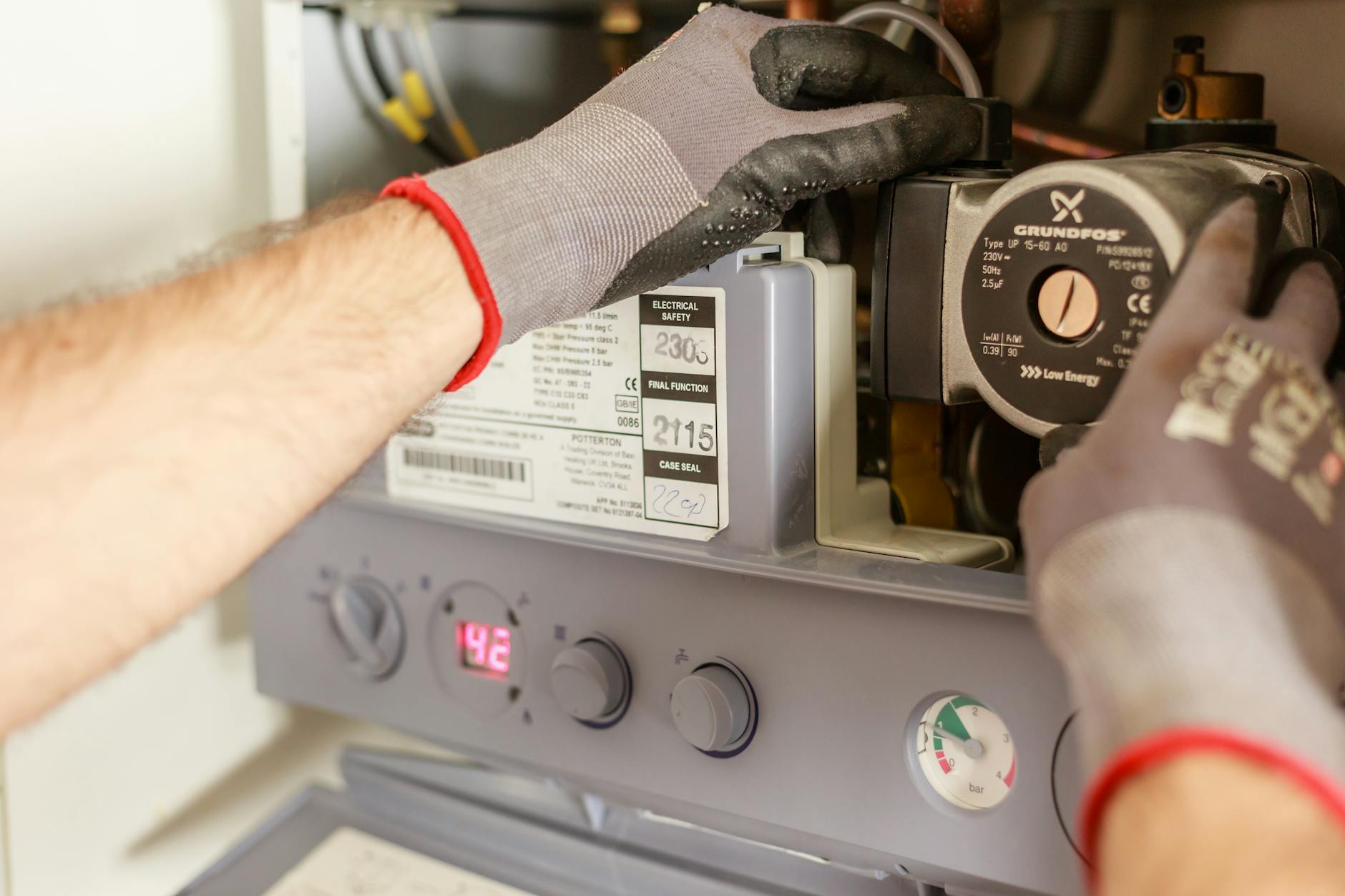
A boiler repair is usually the practical choice when the equipment is in otherwise sound condition and has one isolated, low-cost fault. Replacement becomes more attractive when the boiler is old, inefficient, difficult to repair, or developing repeated problems. The lowest repair bill, however, does not always provide the best long-term value.
>Boiler performance also affects your home's overall energy efficiency. An assessment can help separate boiler problems from building-level issues such as insulation gaps or duct problems.
How old is too old for a boiler?
ENERGY STAR recommends considering replacement at approximately 15 years, but age alone does not determine the outcome. A well-maintained cast-iron boiler may remain serviceable for 20–30 years. Steel and many condensing boilers commonly reach about 15–20 years, depending on design, water quality, installation quality, and maintenance.
Use age as a prompt for evaluation, not as an automatic replacement deadline. A 17-year-old boiler with a documented service history, reliable parts, and no major corrosion may still have useful life. A 12-year-old unit with extensive scaling, repeated control failures, or pressure loss may be a weaker candidate for another major repair.
Review the maintenance history if records are available. Records can reveal whether the boiler received annual service, how often parts failed, and whether previous technicians identified developing issues. A lack of records does not prove poor care, but it makes an inspection more important.
What symptoms should be evaluated promptly?
Leaks, banging or rumbling, pressure loss, pilot-light failures, uneven heating, rising bills, and inconsistent hot water all deserve professional evaluation. The symptom alone does not determine whether the boiler should be repaired or replaced. It does indicate that the system should not be ignored.
Some faults have a narrow repair scope. A failed circulator pump, stuck zone valve, trapped air, dirty thermocouple, or inexpensive expansion-tank problem may be correctable without replacing the entire boiler. The cost and labor should be substantially lower than a full equipment installation.
Other patterns are more serious. Persistent pressure loss may indicate corrosion, a heating-surface failure, a water-side problem, or a broader piping issue. Cracked cast-iron sections or extensive corrosion are especially important to diagnose correctly. A leak at the base of a cast-iron boiler can sometimes come from a repairable gasket or push nipple, but it can also be evidence of a cracked section. Confusion between the two can lead to repeated expenses.
Uneven heating is not always a boiler problem. Zone valves, circulators, controls, piping design, and even room-level heat distribution can affect comfort. A technician should trace the fault before a replacement decision is made.
Repair or replace: a practical comparison
| Factor | Boiler repair may make sense when | Replacement may make more sense when |
|---|---|---|
| Equipment condition | The shell, heat exchanger, and major components are generally sound. | There is extensive corrosion, cracking, or repeated pressure loss. |
| Fault history | This is the first major failure. | The same system needs frequent emergency work. |
| Expected service life | Several reliable heating seasons remain. | Only one or two seasons are likely at best. |
| Cost | The repair is a small fraction of the installed replacement price. | The repair approaches or exceeds half of a new system's installed cost. |
| Efficiency | Current consumption is reasonable for the equipment and home. | An old unit uses substantially more fuel and has costly controls or parts. |
| Future plans | The home is unlikely to change soon. | A renovation, addition, or efficiency project is already planned. |
How to compare repair and replacement costs
Ask for written quotes for both options. Generic online price ranges are useful only as a starting point because boiler work varies by fuel type, location, access, piping condition, and local labor costs. A minor repair may cost a few hundred dollars. A major repair involving a circulator or control board can exceed $1,000, while a complete replacement generally costs several thousand dollars installed.
One screening rule is to reconsider replacement when the proposed repair costs more than 50% of the installed price of a new boiler. Another rule compares boiler age with repair cost: if age multiplied by repair cost exceeds $5,000, the repair deserves closer scrutiny. These are screening tools, not inspection results. A low-cost repair on a new boiler may be clearly reasonable, while the same repair on a nearly end-of-life system may be poor planning.
A replacement quote should state more than the equipment price. It should address the efficiency tier, fuel compatibility, steam or hot-water configuration, venting, controls, piping changes, code corrections, permits, and required accessories. Confirm that the quote includes installation, removal of the old unit, start-up, and any necessary inspections.
What about efficiency and operating savings?
A 20-year-old boiler may operate at roughly 60–70% efficiency. Modern condensing models can reach approximately 90–98% efficiency, depending on the equipment and operating conditions. That gap can make an older boiler expensive to run, especially in a home that requires heat throughout the winter.
Some industry estimates suggest annual heating costs could fall by 20–40% after an efficiency upgrade, but those savings are not guaranteed. Fuel prices, climate, thermostat settings, controls, insulation, ductwork, and maintenance all influence actual results. A new boiler cannot correct poor heat distribution or heat loss through an unfinished attic, walls, or windows.
>Before purchasing equipment, consider whether home or loft insulation improvements would reduce heating demand. Addressing the building envelope may improve comfort for every heating system.
Include warranties, parts, and comfort in the decision
Compare warranty length, labor coverage, parts availability, local service support, and the controls included with each option. Ensure the proposed equipment is compatible with the existing system. A modern appliance is not automatically a better investment if the quote omits essential piping, venting, or electrical work.
Think in total ownership terms. The replacement decision should consider the purchase price, installation, future maintenance, expected energy use, likely repair risk, and how long the home will remain in its current configuration. If a major renovation, addition, or system redesign is planned within the next few years, coordinating the boiler project may prevent additional labor later.
Annual maintenance can extend useful life and improve reliability. Ask what maintenance the current boiler needs, how much it costs, and whether parts will remain available. For a newer or well-maintained unit, a safe repair may bridge one or two seasons while household funds are limited. Repeated temporary repairs on a boiler more than 20 years old are rarely a strong long-term strategy.
When safety concerns override the economics
Gas odors, carbon-monoxide alarms, active leaks, soot, abnormal flue behavior, and combustion concerns require immediate attention. Leave the area if a gas leak is suspected and contact the appropriate emergency or utility service. Do not treat these warnings as routine do-it-yourself repair opportunities.
Have a licensed boiler professional inspect gas, oil, or combustion equipment before authorizing work. Replacement projects may require permits, inspections, venting upgrades, piping corrections, and confirmation of current local requirements. Ask about available utility rebates, including Pennsylvania programs when applicable, but verify eligibility, approved equipment, and incentive terms directly with the current program administrator.
A decision framework for homeowners
- Address safety first. Rule out gas leaks, carbon-monoxide risk, active leakage, and combustion problems.
- Get a diagnostic inspection. Identify the failed component and determine whether other major defects are present.
- Request two written scopes. Compare a repair quote with a complete installed replacement quote.
- Estimate remaining life. Consider age, service history, corrosion, efficiency, parts availability, and repeated faults.
- Review operating value. Compare likely fuel savings, maintenance, warranty, comfort, and repair risk.
- Check the project timeline. Coordinate replacement with planned renovations or efficiency work to avoid duplicated costs.
The best choice is the option that safely meets the home's needs over its expected ownership period. Repair is often sensible for an isolated fault in a younger, well-maintained boiler. Replacement becomes more defensible when high efficiency, dependable parts, lower operating costs, or a planned renovation can justify the investment.
Unsure whether boiler repair or replacement fits your home? Contact ProNest CX to discuss your heating priorities and plan a more informed next step.


