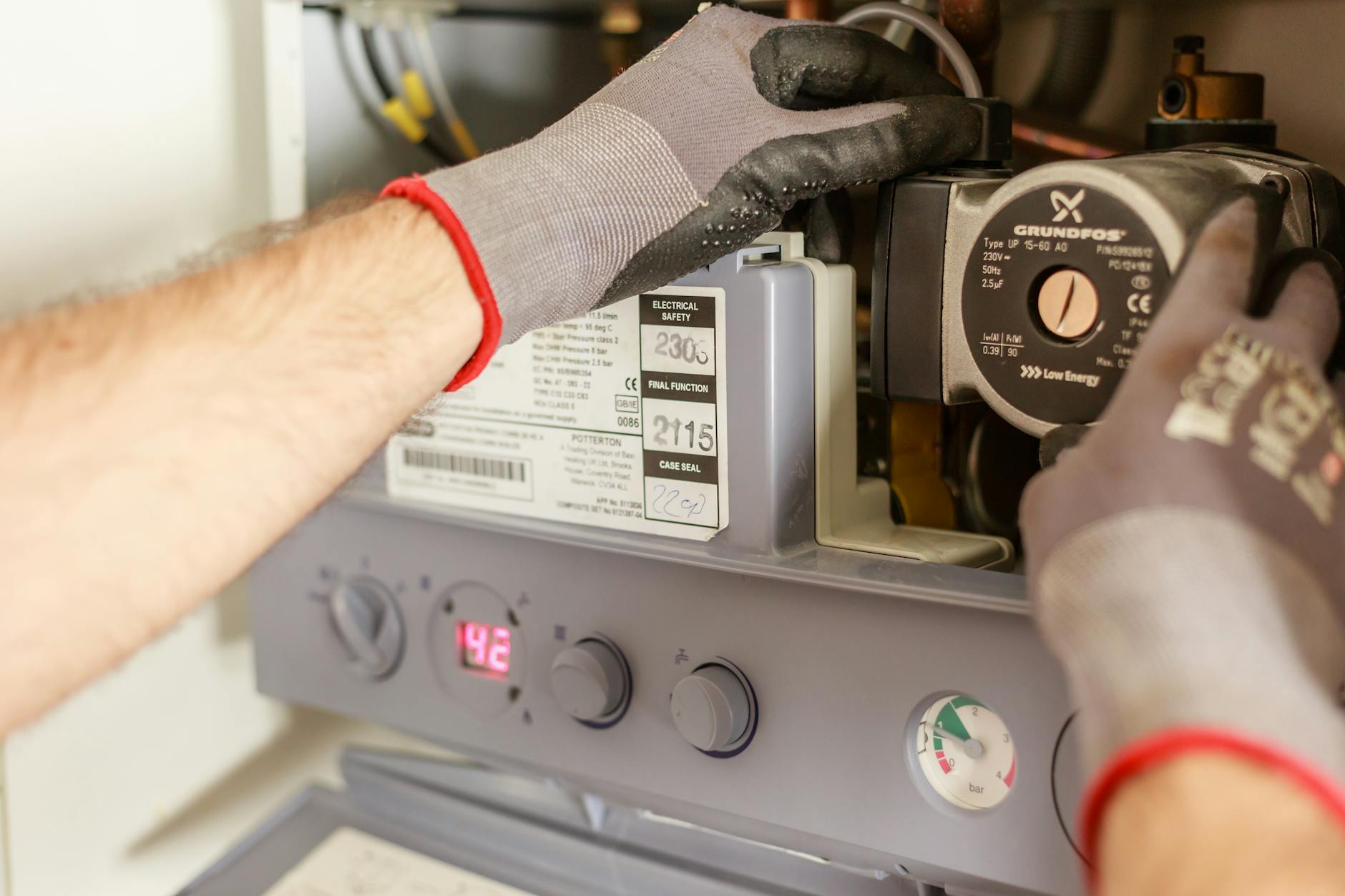
When planning domestic energy efficiency renovations, UK homeowners frequently face a capital allocation dilemma: should available financial reserves go towards replacing an aging heating system with an A-rated condensing gas boiler, or into rooftop solar photovoltaics (PV)? Both energy retrofits serve to counteract volatile utility tariffs, yet they operate on distinct mechanical principles, serve different primary fuel vectors, and generate returns across contrasting timelines. A high-efficiency condensing boiler directly curbs cubic-metre fuel consumption for space heating and domestic hot water. Conversely, a solar photovoltaic array generates zero-marginal-cost electricity on-site to offset grid imports and yield export revenue under the Smart Export Guarantee (SEG).
Arriving at an optimal decision requires an objective review of upfront mechanical costs, structural readiness, seasonal demand curves, routine servicing liabilities, and long-term asset depreciation. This technical evaluation balances these two improvements to help property owners establish the most pragmatic sequencing plan for domestic energy efficiency.
Upfront Capital Outlay and Installation Costs
Capital budgeting forms the initial hurdle for any home energy project. Upgrading an outdated non-condensing or degraded G-rated appliance to a high-efficiency A-rated condensing system boiler or combi unit generally requires a capital expenditure between £2,000 and £4,000 across the UK. This price envelope typically covers the appliance itself, supply pipework adjustments, power-flushing or chemical cleansing of the existing radiator network, high-performance magnetic filtration, thermostatic room controls, and certified Gas Safe commissioning. In straightforward swaps where the existing flue pathway and condensate pipe routes remain standard, labor duration is modest, rarely exceeding one to two days of site disruption.
By comparison, a residential 4kW to 5kW solar photovoltaic system (typically consisting of 10 to 12 monocrystalline panels rated at 400W–430W each) generally carries an installation cost of £6,000 to £8,500. While residential solar PV systems currently benefit from a 0% VAT relief policy across Great Britain until March 2027, the initial cash commitment remains more than double that of a boiler replacement. Adding an integrated 5kWh to 10kWh lithium iron phosphate (LiFePO4) storage battery to hold surplus solar generation for evening peak demand elevates the turnkey investment to £9,500–£13,000. Solar requires higher liquidity at installation, functioning as a micro-generation capital asset rather than a fuel-consuming heating appliance.
Direct Efficiency Gains and Heating Fuel Reductions
The economic return of replacing an existing gas boiler depends heavily on the seasonal operational gap between the old unit and the replacement unit:
- Legacy Non-Condensing Units: Appliances installed before the mandatory 2005 building regulation revisions typically operate at seasonal efficiencies between 60% and 70%, with 30p to 40p of every pound spent lost through high-temperature flue gases.
- Modern Condensing Boilers: Modern condensing units capture latent heat from water vapor within the flue exhaust, delivering seasonal space heating energy efficiencies of 92% to 94% under proper low-temperature return conditions.
- Net Efficiency Leap: Replacing a 65% seasonal efficiency appliance with a 93% condensing model achieves an immediate 25% to 30% reduction in gross household gas demand.
For an average detached or semi-detached UK household consuming approximately 12,000 kWh of natural gas annually at standard price-capped rates (around 6p–7p/kWh), upgrading an obsolete boiler delivers annual fuel savings of £200 to £350. However, if the current appliance is an existing condensing unit running at 84% to 87% efficiency, upgrading to a modern model delivers modest reductions—rarely exceeding £70 to £110 in annual fuel savings.
Solar PV Economics: Self-Consumption and SEG Tariffs
Rooftop solar operates by substituting expensive grid electricity imports with local, on-site generation. In central and southern UK regions, an unshaded, south-facing 4kW photovoltaic array yields between 3,400 kWh and 3,900 kWh of electrical energy per annum. East-west arrays yield slightly less, around 2,900 kWh to 3,300 kWh, but provide a broader daily production profile across morning and afternoon hours.
Because domestic grid electricity remains priced approximately four times higher per kilowatt-hour than natural gas (roughly 24p–26p/kWh versus 6p–7p/kWh), every self-consumed kilowatt-hour provides notable financial value. A typical daytime household consuming 40% to 50% of direct solar output avoids £350 to £500 in imported utility charges annually. The unconsumed balance exported back into the National Grid earns revenue via the Smart Export Guarantee (SEG). With current domestic export tariffs offering rates between 5p and 15p per exported kWh, homeowners generate an additional £100 to £200 annually, pushing annual returns to £450–£700 without storage.
When combined with residential battery storage, home self-consumption can rise from 45% to over 80%. This configuration allows homes to store excess afternoon production and utilize it during expensive peak evening hours, producing combined bill offsets and export earnings between £750 and £950 per year.
Comprehensive Cost and Payback Comparison
Evaluating these two energy upgrades involves weighing upfront investment, typical service life, and operational returns over several decades:
| Upgrading Option | Typical Upfront Outlay | Average Payback Period | Projected Annual Savings | Expected Service Life | Operational Carbon Impact |
|---|---|---|---|---|---|
| New A-Rated Condensing Boiler | £2,000 – £4,000 | 7 – 12 years (vs. old G-rated) | £200 – £350 (gas bill offset) | 12 – 15 years | Moderate (lowers gas consumption) |
| Solar PV Array (4kW System) | £6,000 – £8,500 | 8 – 11 years (without battery) | £450 – £650 (offset + SEG) | 25 – 30 years | High (displaces grid generation) |
| Solar PV + Battery Storage | £9,500 – £13,000 | 10 – 14 years | £750 – £950 (high self-use) | 10–12 yrs (battery) / 25 yrs (PV) | Substantial (optimizes clean energy) |
Maintenance, Inverter Replacement, and Servicing Overheads
A complete financial assessment must account for the ongoing maintenance demands and component lifespans of both heating systems and renewable installations:
- Boiler Servicing: Condensing boilers require mandatory annual servicing to preserve manufacturer warranties and verify safety standards. Over a 12-to-15-year lifecycle, annual servicing costs (averaging £80 to £120 annually), alongside potential replacement of diverter valves, pumps, or expansion vessels, add roughly £1,200 to £1,800 in total ownership expenses.
- Solar String Inverter Replacement: Monocrystalline solar panels feature no moving parts and carry performance warranties of 25 years. However, the DC-to-AC string inverter has a typical operational life of 10 to 14 years. Homeowners should anticipate a mid-life replacement cost of £800 to £1,400 for a new inverter. Microinverter systems avoid a single point of failure but feature slightly higher initial commissioning expenses.
- Battery Degradation: Residential storage batteries gradually lose capacity over time, typically retaining 70% of initial capacity after 10 years or 6,000 charge cycles, which may necessitate battery renewal before the solar panels reach end-of-life.
Seasonal Demand Disconnect and Heating Realities
A crucial technical factor when balancing solar energy against heating upgrades is the seasonal mismatch between renewable generation and household heat consumption. In the UK, approximately 70% to 75% of solar irradiation occurs between April and September, when residential heating demand is essentially zero. During December and January, when household space heating is most needed, shorter days and low sun angles reduce solar output to roughly 10% to 15% of peak summer values.
Consequently, standalone solar panels cannot replace a home heating system during sub-zero winter spells. Even if a solar diverter directs surplus energy into an immersion cylinder, winter solar gains are insufficient to handle base domestic hot water, let alone central heating radiators. In contrast, an efficient condensing boiler delivers steady thermal output during freezing months, directly lowering heating bills during seasonal demand peaks.
Impact on Energy Performance Certificate (EPC) Ratings
Both improvements enhance a property's Energy Performance Certificate (EPC) rating, which can positively impact property value and rental compliance:
- Boiler Replacement EPC Impact: Swapping a non-condensing boiler for a modern A-rated system typically raises an EPC score by 4 to 9 Standard Assessment Procedure (SAP) points. For older properties hovering near the lower boundary of an E or D rating, this upgrade alone can elevate the home to an EPC C band.
- Solar Photovoltaic EPC Impact: Adding a 4kW solar array can boost an EPC rating by 8 to 15 SAP points, depending on the property's floor area and existing thermal fabric. Because SAP modeling heavily credits on-site electrical generation, solar PV provides an effective mechanism for improving a dwelling's official energy rating.
Determining the Right Upgrade Sequence
Deciding which installation to execute first depends on current equipment reliability, available capital, and property specifics:
- Prioritize a Boiler Replacement If: Your current boiler is over 15 years old, shows ongoing pressure loss, requires frequent repairs, or relies on an outdated open-vent design. Winter mechanical breakdowns often lead to expensive emergency replacements, making planned renewal a prudent preventative step.
- Prioritize Solar Panels If: Your existing boiler is in sound mechanical health with years of remaining service life, your roof has sound structural decking with south, east, or west orientation, and daytime electricity consumption is consistent (such as home workers or daytime EV charging).
- Consider Integrated Electrification: For homes seeking to move away from fossil fuels, pairing solar panels with an air source heat pump supported by the UK Boiler Upgrade Scheme (£7,500 capital grant) offers a viable pathway toward full domestic decarbonization over the coming decade.
Evaluating renewable energy or heating improvements for your property? Contact our team to discuss tailored efficiency metrics and request an objective home assessment.
Conclusion
Neither a high-efficiency boiler nor a rooftop solar photovoltaic array is universally superior; each addresses distinct operational and budgetary priorities. A new condensing boiler requires lower capital outlay, provides immediate protection against winter heating costs, and lowers gas use when replacing an obsolete unit. Conversely, rooftop solar panels function as an independent electrical generation asset, shielding households from rising electricity rates with an operational lifespan of 25 years or more. Evaluating appliance condition, roof orientation, and capital readiness provides the most balanced route toward sustained domestic energy reductions.


