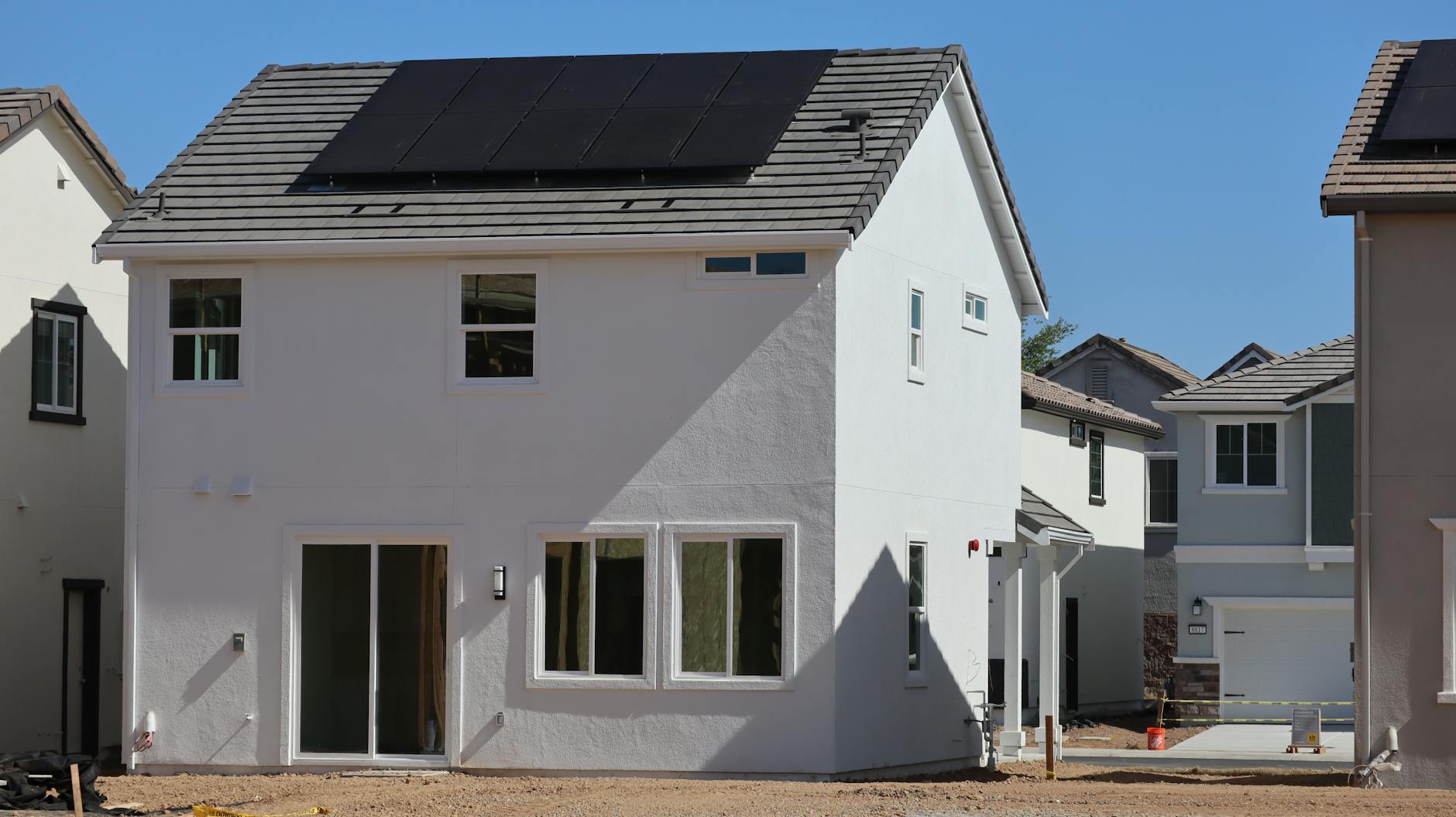
When seeking to reduce household utility expenses and shrink environmental footprints, property owners frequently ask whether to install solar photovoltaic (PV) panels or invest in thermal insulation first. Both improvements yield measurable financial and environmental advantages, yet they operate on fundamentally different thermodynamic and economic mechanisms. Solar panels generate clean electricity from daylight, offsetting grid power consumption. Insulation preserves interior thermal energy, directly curbing fuel demand for space heating and cooling.
Understanding how these two measures interact—along with their respective capital expenditures, payback periods, and seasonal performance dynamics—is critical for making a sound, phased investment in your property's efficiency.
The "Fabric-First" Approach Explained
In modern architectural engineering and building science, retrofit experts broadly recommend a "fabric-first" methodology. This design philosophy emphasizes improving the energy efficiency of the building envelope before adding mechanical equipment or renewable generation systems. The logic is straightforward: minimizing baseline thermal demand reduces the overall energy required to keep a home comfortable.
If you install an extensive solar array on an uninsulated property, a substantial portion of the generated energy—or the money saved from grid displacement—is effectively squandered heating outdoor air that seeps through draughty lofts and uninsulated cavities. Conversely, sealing the building envelope stabilizes internal temperatures year-round, lowers baseline heating requirements, and allows any future heat pump or solar installation to be sized more accurately and cost-effectively.
Upfront Capital Costs and Payback Comparison
A frequent misconception is that solar panels require less capital outlay than basic insulation retrofits. While extensive external solid wall insulation can indeed demand considerable capital, introductory measures such as loft or cavity wall insulation represent some of the most cost-effective home retrofits available.
A typical 3.5 kW to 4.5 kW residential solar PV system in the UK generally costs between £5,000 and £8,500 depending on panel efficiency, inverter quality, and roof scaffolding requirements. Adding battery storage can add another £2,500 to £5,000 to the total investment. In comparison, topping up loft insulation to the standard 270mm depth typically costs between £500 and £1,200 for a semi-detached house, with professional cavity wall insulation usually running between £1,000 and £2,500.
| Metric | Loft & Cavity Insulation | Solid Wall Insulation | Residential Solar PV (3.5–4kWp) |
|---|---|---|---|
| Typical Upfront Cost | £500 – £2,500 | £8,000 – £14,000 | £5,000 – £8,500 |
| Annual Bill Savings | £250 – £450 | £380 – £600 | £400 – £650 (with smart export) |
| Average Payback Period | 2 – 6 years | 15 – 25 years | 8 – 13 years |
| Expected Lifespan | 40+ years (building lifetime) | 30+ years | 25 – 30 years (inverter replacement at ~12 yrs) |
| Primary Season of Impact | Autumn and Winter | Autumn and Winter | Spring and Summer |
As the comparison table illustrates, standard loft and cavity insulation deliver swift capital payback periods, often recouping installation expenses within two to six years. Solar PV offers reliable long-term generation over a 25-year panel lifecycle, but involves a higher initial financial commitment before reaching positive net returns.
Consider a practical financial scenario: an uninsulated semi-detached home investing £1,800 in combined loft top-up and cavity wall insulation can trim annual space heating expenditure by approximately £380. That represents an immediate return on investment of over 21% per year, completely shielded from energy price fluctuations. Conversely, spending £6,500 on a 4 kWp solar system might yield around £520 in combined electricity savings and Smart Export Guarantee (SEG) payments annually, producing an initial return of roughly 8%. While both figures are attractive relative to standard savings accounts, fabric upgrades yield substantially faster liquidity recovery.
Evaluating Insulation Options: Loft, Cavity, and Solid Wall
The thermal efficiency of your property depends substantially on wall construction and roof design. Addressing uninsulated areas should follow a clear hierarchy based on return on investment and installation complexity.
1. Loft and Attic Insulation
Because warm air rises through convection, an uninsulated roof accounts for approximately 25% of all heat loss in a typical home. Mineral wool, sheep's wool, or rigid foam boards laid across and between ceiling joists provide an immediate barrier. Upgrading from minimal insulation to the recommended 270mm depth can lower heating requirements significantly with minimal disruption to occupants.
2. Cavity Wall Insulation
Homes built after the 1920s generally feature two masonry skins separated by an air cavity. If uninsulated, walls can contribute to roughly 35% of total building heat loss. Injecting blown mineral fibre, bonded polystyrene beads, or polyurethane foam into the cavity fills the void, stopping convective air currents within the wall structure while preserving internal floor space.
3. Solid Wall Insulation
Properties constructed prior to 1920 predominantly feature solid brick or stone walls without a cavity. Addressing solid walls requires either internal dry lining (insulation boards fixed onto internal walls) or external wall insulation (cladding covered with protective render). While solid wall retrofits deliver dramatic thermal and aesthetic upgrades, they carry higher installation costs and longer financial payback periods.
Understanding Solar PV Dynamics and Seasonal Generation
Solar photovoltaic systems transform solar irradiance into direct current (DC) electricity, which an inverter converts into alternating current (AC) for domestic appliances. While solar technology continues to improve in efficiency, its primary limitation in temperate climates is seasonal variance.
In northern and temperate latitudes, up to 70% of a solar array's annual electricity generation occurs between April and September. Household electricity and heating demands, however, peak between November and February, when solar production drops to its lowest levels due to shorter days and lower solar angles. During a typical December day, a 4 kWp array might generate as little as 2 to 4 kWh of electricity, whereas the same system can routinely produce 18 to 24 kWh daily throughout June and July. Consequently, solar panels generate surplus power during summer when space heating needs are virtually zero, while providing limited output during cold winter mornings and evenings when heating draw peaks.
Integrating smart tariffs, solar diversion units for domestic hot water cylinders, or home battery storage helps maximize self-consumption of solar power throughout the year. Nonetheless, solar panels cannot directly cure draughts or prevent structural heat loss during freezing temperatures.
Synergies: Heat Pumps and Future Electrification
The strategic relationship between insulation and solar generation becomes especially apparent when planning for low-carbon heating, such as air-source or ground-source heat pumps. Heat pumps operate most efficiently at lower flow temperatures, which requires an adequately insulated building envelope to keep rooms comfortable during sub-zero conditions. Installing insulation first lowers the home's peak heat loss, permitting the installation of a smaller, less expensive heat pump unit with lower operating costs.
Once a properly insulated building envelope and heat pump are in place, a solar PV array can supply a meaningful portion of the electricity required for hot water generation and transitional shoulder-season heating. Without adequate thermal retention, however, the electricity demanded by heating systems during cold spells quickly outstrips solar output, forcing heavy reliance on the grid.
Maintenance and Long-Term Durability
Lifecycle maintenance requirements also differentiate these two upgrades. Thermal insulation materials such as mineral wool or cavity beads are entirely passive. Once correctly installed, they contain no moving parts, demand virtually zero ongoing maintenance, and remain functional for the full structural lifespan of the building.
Solar PV systems, by contrast, represent an active electrical installation. While photovoltaic panels possess no moving parts and routinely carry 25-year performance warranties, the supporting infrastructure requires periodic oversight. String inverters typically require replacement after 10 to 15 years at an estimated cost of £800 to £1,500. Routine visual inspections, monitoring for shading or component wear, and occasional panel cleaning in high-dust environments are also recommended to ensure the system consistently performs at rated capacity.
Carbon Offset and Environmental Impact
Both interventions offer significant environmental advantages, but their operational carbon savings manifest through distinct pathways:
- Insulation: Directly curtails primary fossil fuel consumption (primarily natural gas, heating oil, or direct electric resistance heating) by reducing space heating hours. Because space heating accounts for the vast majority of residential carbon emissions, insulation provides immediate, consistent, and passive carbon abatement from the moment of installation.
- Solar PV: Displaces carbon-intensive grid electricity generation. When panels produce more electricity than your home consumes, excess power exports to the grid, displacing marginal fossil generation elsewhere in the network.
From an embodied carbon standpoint, mineral wool and cellulose insulation carry low to moderate embodied energy relative to their long service life. Solar panels require energy-intensive manufacturing processes for silicon purification and module assembly, although typical residential modules offset their manufacturing footprint within two to three years of active generation.
Determining the Right Sequence for Your Home
While local building conditions vary, following a structured sequencing strategy delivers the most balanced financial and energy performance outcomes:
- Conduct a Comprehensive Thermal Assessment: Check current loft insulation depth, check whether wall cavities remain unfilled, and inspect around openings for noticeable air leakage.
- Address Low-Hanging Insulation First: If your loft has less than 100mm of insulation, or if your cavity walls remain unfilled, prioritize these measures. The relatively low initial investment and swift payback yield substantial energy savings almost immediately.
- Evaluate Roof Condition Before Solar Installation: Solar arrays remain on a roof for 25 years or longer. Ensuring your roof covering, flashing, and rafters are structurally sound avoids costly panel removal and reinstallation down the line.
- Size Solar Systems to Fit Insulated Demand: Once insulation upgrades stabilize your baseline energy requirements, calculate solar capacity based on realistic daytime electricity loads and prospective electrification options, such as heat pumps or electric vehicles.
Evaluating which retrofit makes the most financial sense for your property? Consult with our independent energy specialists to review diagnostic audits, property specifications, and tailored efficiency sequencing.
Financial Incentives and Regulatory Considerations
Homeowners exploring energy retrofits should also investigate national and regional grant opportunities. Many jurisdictions maintain subsidized funding schemes, zero-VAT policies, or energy company obligation programmes targeted at loft and cavity insulation for qualifying properties. Under frameworks such as the Energy Company Obligation (ECO4) and the Great British Insulation Scheme (GBIS), eligible households can receive heavily subsidized or fully funded insulation upgrades.
For microgeneration, while the historic Feed-in Tariff has closed to new applicants, market-driven mechanisms such as the Smart Export Guarantee (SEG) compensate households for unconsumed electricity exported back to the grid. In addition, residential solar and battery storage currently benefit from a 0% VAT relief policy across the UK through March 2027, lowering entry costs for generation retrofits.
Reviewing current energy performance certificates (EPC) and local retrofit incentive requirements prior to commissioning work ensures that any planned installations align with regulatory standards and take full advantage of available funding mechanisms.
Conclusion
When choosing between solar panels and insulation, the objective should not be to dismiss one in favour of the other, but rather to sequence them effectively. Basic loft and cavity wall insulation provide immediate thermal comfort, substantial heating bill reductions, and an unbeatable return on investment. Once building fabric heat loss is controlled, installing a solar PV array becomes a powerful secondary measure—generating renewable electricity to power modern homes with maximum long-term efficiency.


