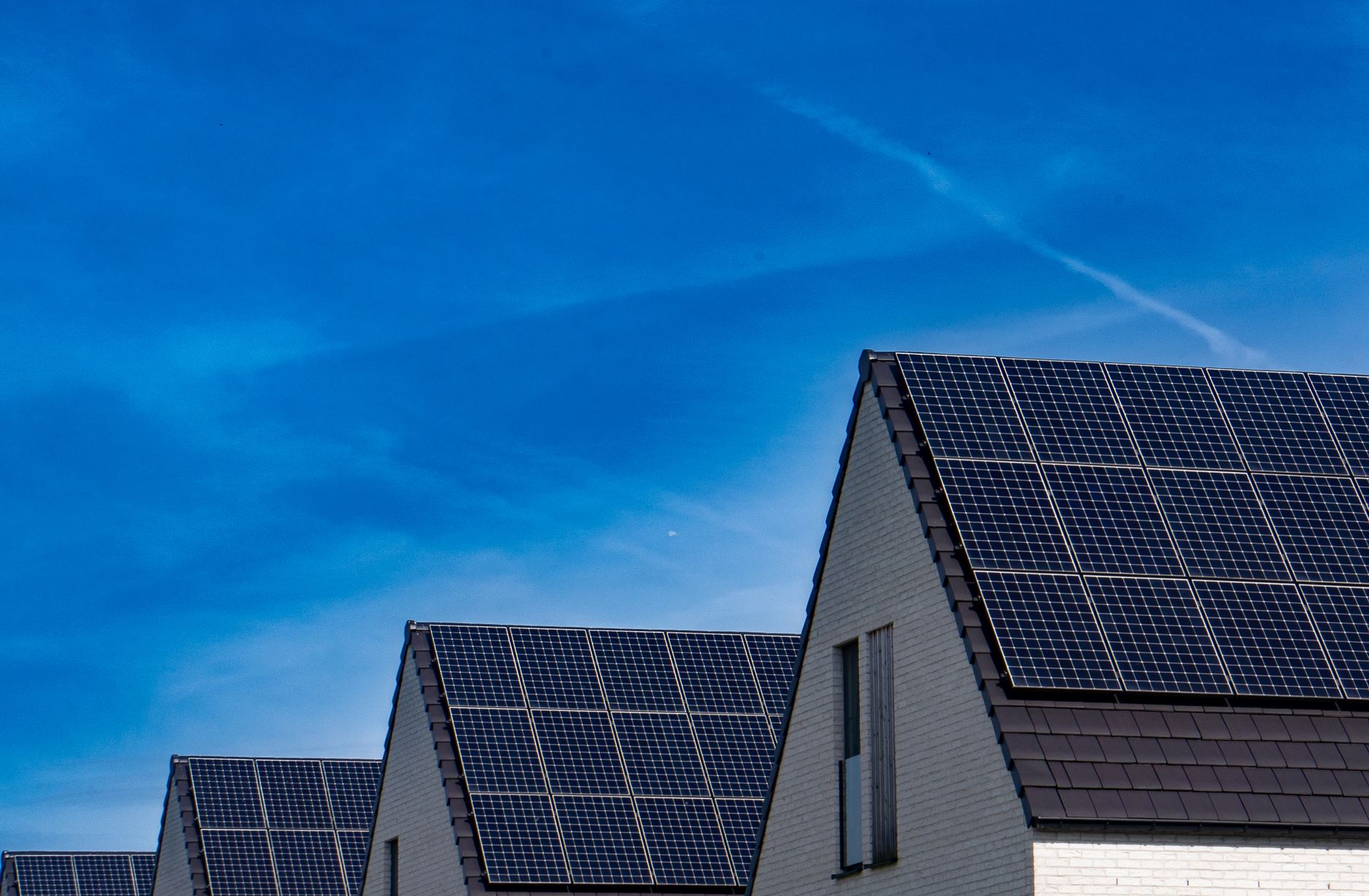
Solar panels without a battery are often the most practical and financially efficient choice for homeowners in 2026. When the local utility offers fair net metering, sending excess power to the grid can act as a low-cost virtual battery. But once the sun goes down, you still depend on the grid. And during a blackout, a standard grid-tied system shuts down for safety.
This guide breaks down the real numbers. It compares costs, payback timelines, and policy conditions so homeowners can decide when solar-only is the stronger investment and when storage eventually becomes necessary.
How Grid-Tied Solar Works Without a Battery
A standard residential system connects directly to the utility grid. During sunny hours, the panels cover most or all of the home's electricity use. Any surplus energy flows backward through the meter and into the grid. The utility records those exports as billing credits.
At night, or during cloudy stretches, the home pulls power from the grid as usual. The homeowner only pays the net difference between what the panels produced and what the home consumed. That is the core of net metering.
Because the grid absorbs excess generation, homeowners do not need a battery to benefit from solar. The system is simpler, has fewer components, and typically costs much less to install and maintain.
What a Battery Adds to the Equation
Adding a premium home battery such as a Tesla Powerwall 3 or Enphase 5P raises the total installation cost by roughly $10,000 to $15,000 before incentives. The battery stores surplus solar energy for evening use, backup power during outages, and self-consumption under unfavorable export rules.
That added capability carries added cost. Storage increases per-kilowatt-hour expense upfront, and the extra hardware also adds weight, maintenance considerations, and additional electrical permits. Fire-code compliance, equipment listings, and utility approval are common requirements for battery installations.
| Factor | Solar-Only (Grid-Tied) | Solar + Battery Storage |
|---|---|---|
| Average payback period | 6 to 9 years | 9 to 13 years |
| Upfront cost increase | Baseline | + $10,000 to $15,000 |
| Backup power during outages | No | Yes |
| Lifecycle emissions | 20 to 40 g CO2/kWh | 50 to 100 g CO2/kWh |
| Dependence on net metering | High | Lower |
Why Solar-Only Often Pays Back Faster
The strongest advantage of skipping a battery is cost. Panels directly reduce purchased electricity from the first month. Without storage, homeowners avoid the capital hit of a premium battery and start saving on utility bills sooner.
Solar-only systems commonly pay back in 6 to 9 years, while solar plus battery systems often take 9 to 13 years. That gap reflects the dollar-per-kilowatt-hour burden storage adds to the project. For a cost-conscious buyer focused on predictable long-term savings or maximum ROI, this difference alone is a serious reason to consider solar-only now.
Environmental impact also favors going solar in either setup. Lifecycle emissions for solar-only run 20 to 40 grams of CO2 per kilowatt-hour. Solar plus battery sits at 50 to 100 grams. Both figures fall far below the roughly 370 grams per kilowatt-hour of the average U.S. grid mix. Battery manufacturing does add footprint, but it does not outweigh avoided fossil-fuel generation.
When Skipping a Battery Becomes Expensive
The strongest caveat is utility pricing policy. Under full net metering, exported solar may receive credits close to the retail value of electricity. In that scenario, the grid already pays fairly for your surplus, and a battery is less financially necessary.
Under net billing or California NEM 3.0, the math flips. Exported solar may be credited at only 5 to 15 cents per kilowatt-hour, while evening grid power can cost 20 to 40 cents. In those markets, California export credits have fallen roughly 75 percent. Storage improves economics by shifting rooftop solar from low-value exports toward higher-value self-consumption, especially under time-of-use rates.
Homes with electric vehicles, heat pumps, or large evening loads face the same pressure. When most household demand peaks after sunset, solar-only systems export heavily during midday and draw expensive power at night. A battery can close that gap.
Reliability and Outage Considerations
A standard grid-tied inverter shuts off during a blackout for safety, preventing back-feeding onto utility lines. That means homeowners relying on solar-only lose power when the grid fails. If continuity of power is a priority, battery storage or special inverter and load configurations become necessary.
For homeowners in areas with frequent outages or critical-load needs, this factor can outweigh the cost savings of going solar without storage. The decision ultimately depends on local outage history and personal comfort with grid dependence.
Designing for the Future
Homeowners who want flexibility can choose a battery-ready design now and defer storage. Hybrid inverters and microinverters allow a future battery to be added without replacing the existing solar equipment. This approach keeps the door open for storage while taking advantage of lower upfront costs today.
Regulatory notes matter here. Net metering, net billing, and export compensation rules vary by utility and can change. Homeowners and property managers should verify current interconnection requirements before finalizing a system design. State, local, and utility incentives for storage should be evaluated separately from solar economics, especially in California for customers of SCE, PG&E, and SDG&E.
Considering solar panel upgrades for your property? Talk to our team for a free, no-obligation home assessment. Review our solar installation guidance to compare options.
Decision Framework for Homeowners
The best path is not one-size-fits-all. Homeowners and property managers should weigh five key factors before deciding.
- Net metering terms: Are exports compensated at or near retail rates, or at wholesale values?
- Outage history: How often does the local grid fail, and how long do outages typically last?
- Time-of-use rates: Does the utility charge more for electricity during peak evening hours?
- Critical loads: Are there medical devices, sump pumps, or home office needs that require continuous power?
- Future plans: Will adding an EV, heat pump, or battery fit within the next five years?
A cost-conscious buyer in a reliable-grid area with fair export credits may choose solar-only now and design for battery readiness later. A homeowner facing NEM 3.0-style export credits or frequent outages may find that storage closes the financial and practical gap faster than expected.
Not sure which solar configuration fits your home best? Reach out to our advisors to evaluate your energy setup. Explore energy efficiency upgrades that complement your solar investment.
Final Takeaway
Solar panels without a battery remain a strong choice for many homeowners in 2026. Lower upfront cost, faster payback, and simpler installation make solar-only systems attractive when local policies support fair export compensation. But when export credits fall sharply, peak demand stretches into the evening, or outages are common, battery storage moves from luxury to practical investment.
Review your utility rate structure, outage history, and long-term energy plans before committing. The right decision today may also include a clear path to adding storage later.
Evaluating your solar or renewable energy options? Contact our team for a free, no-obligation home assessment.
Assessing Long-Term Energy Savings
When investing in home upgrades, initial installation costs are only part of the equation. Homeowners must weigh upfront expenses against long-term utility bill reductions, thermal performance gains, and potential property value increases.
Material Quality and Durability Standards
Choosing high-performance materials—such as energy-efficient window glazing, advanced insulation fibers, or weather-resistant roofing—ensures structural longevity and minimizes ongoing maintenance overhead.


