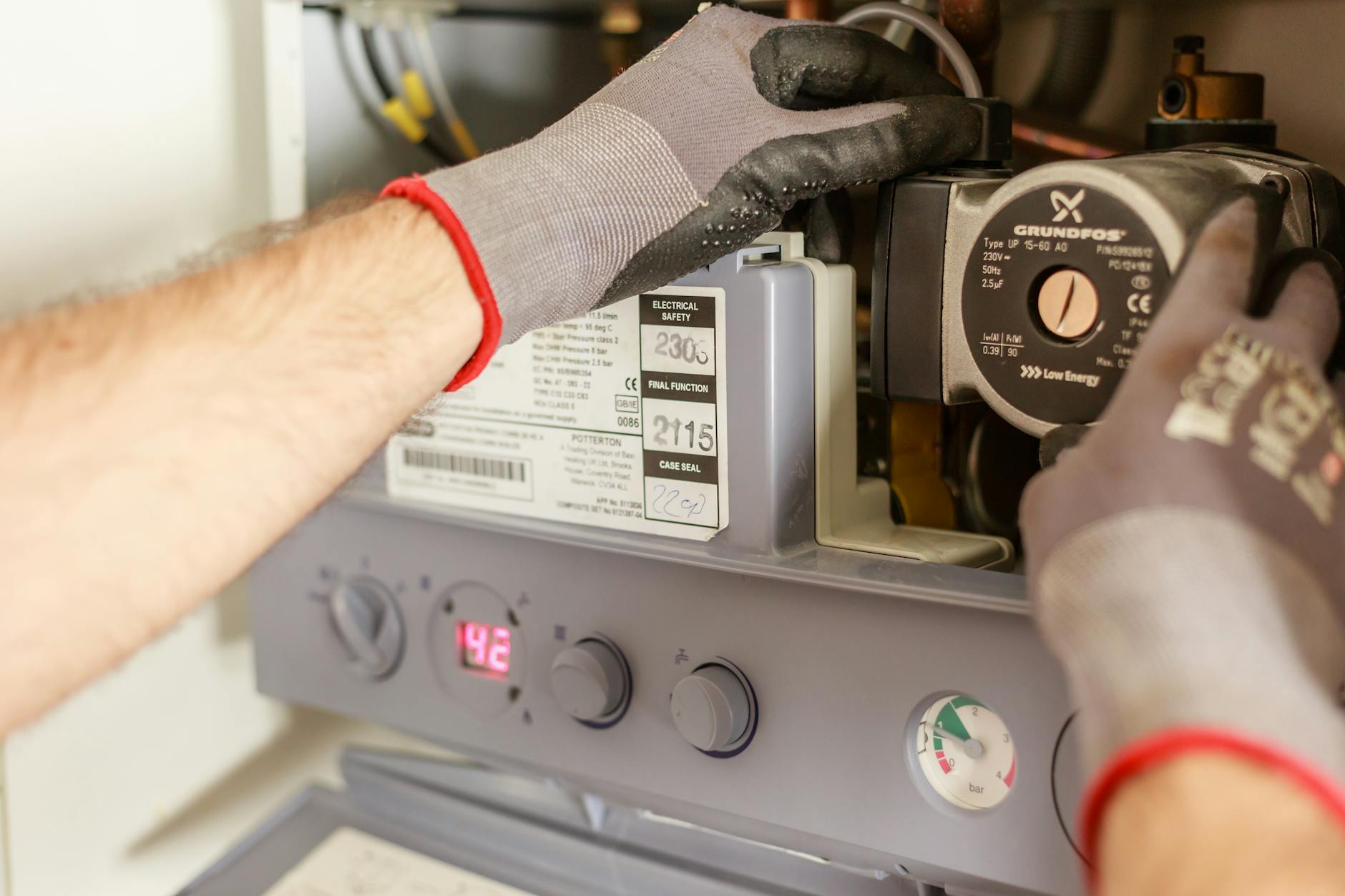
When your heating bills climb unexpectedly, the first instinct is to blame rising fuel prices. In many cases, the culprit is actually the boiler itself – operating less efficiently because of neglected maintenance, an incorrect size for the home, or an aging design that can’t keep up with modern demands.
Common Causes of Excess Gas Use
- Dirty filters and heat exchangers – When soot or scale builds up, the boiler must run longer to deliver the same temperature, raising consumption by 10–15%.
- Faulty or poorly placed thermostat – An inaccurate thermostat can keep the boiler firing for 10–12% more energy than needed.
- Improper boiler sizing – Oversized units short‑cycle, while undersized units run continuously at max output; both can increase usage by 10–20%.
- Air leaks around windows and doors – Drafts can raise heating demand by up to 15%, forcing the boiler to work harder.
Detailed Impact of Each Issue
| Issue | Typical Gas Use Increase | Recommended Action |
|---|---|---|
| Dirty filters / heat‑exchanger | 10–15% | Clean or replace annually |
| Faulty thermostat | 10–12% | Calibrate or upgrade to a smart thermostat |
| Improper sizing | 10–20% | Consult an HVAC professional for a correct load calculation |
| Window/door drafts | Up to 15% | Seal gaps, improve glazing |
Case Study: The Smiths’ Energy Savings
The Smith family, a household of four in Manchester, UK, experienced a 20% jump in their gas bill after 15 years of boiler operation. After a full service that included cleaning the heat‑exchanger, installing a new thermostat, and sealing drafty windows, their annual consumption dropped from 9,500 to 7,200 therms – a savings of about 30%.
Boiler Types and Their Efficiency
Choosing the right boiler technology is key to long‑term savings. Modern condensing boilers recover heat that would otherwise escape, while electric boilers offer zero combustion emissions. Understanding the typical efficiency of each model helps match the right system to a home’s heating profile.
| Boiler Type | Typical Efficiency (%) | Notes |
|---|---|---|
| Standard Condensing | 92–98 | Best for most homes |
| High‑Efficiency Condensing | 98–99 | Higher upfront cost, lower fuel use |
| Electric | 100 | Zero emissions, depends on electricity source |
| Gas Fired with Modulation | 88–94 | Provides more stable heat but less efficient |
“A well‑maintained boiler can reduce annual gas consumption by as much as 30% compared to a neglected system,” notes Dr. Elena Ruiz, a thermal systems engineer with 15 years of HVAC research.
Maintenance Checklist for Real Savings
- Inspect and replace filters every 12 months.
- Calibrate the thermostat or consider a programmable or smart model.
- Schedule an annual service to check combustion, pressure, and scale buildup.
- Bleed radiators to remove trapped air.
- Inspect for drafts and seal gaps around windows, doors, and service penetrations.
- Evaluate loft, wall, and floor insulation and add upgrades where needed.
Energy Incentives and Rebates
Many local and national schemes offer rebates, tax credits, or low‑interest loans for installing high‑efficiency boilers or improving home insulation. Early engagement with a certified energy assessor can help identify eligible programs and streamline application processes. Examples include the UK Home Energy Efficiency Programme, the US Weatherization Assistance Program, and various EU‑wide grants for renewable‑energy retrofits.
Decision‑Making Tips
When deciding whether to repair or replace, consider:
- Age of the boiler (units older than 15 years often exceed 30% efficiency loss).
- Current operating costs versus projected savings from a new, efficient model.
- Potential for combined upgrades (e.g., adding a smart thermostat and sealing windows simultaneously).
- Availability of incentives that could offset installation costs.
“Assessing all upgrade options together gives a clearer picture of the true return on investment,” says Alex Chen, a certified heating consultant.
Smart Controls and Monitoring
Integrating smart controls can further reduce gas use by optimizing boiler cycles based on real‑time demand. Features such as outdoor temperature sensors, weather‑compensated modulation, and remote monitoring allow the system to adjust output before the home even reaches the desired temperature.
- Outdoor reset control: Adjusts boiler water temperature according to outdoor conditions, preventing overheating.
- Smart thermostats: Learn occupancy patterns and can be controlled via mobile apps, reducing unnecessary heating.
- Energy dashboards: Provide homeowners with visual feedback on consumption trends, encouraging behavior changes.
Energy‑Saving Calculations
Typical UK household heating demand is about 10 000 kWh per year. A 30 % reduction equals roughly 3 000 kWh saved, which at the 2024 average gas price of £0.04 per kWh translates to £120 annual savings. Below is a simple calculation model you can apply:
- Identify your annual gas consumption from your bill (in therms). 1 therm ≈ 29.3 kWh.
- Multiply by the efficiency loss you suspect (e.g., 15 %).
- Convert the excess kWh to cost using your local rate.
Example: 9 500 therms × 29.3 kWh/therm = 278 350 kWh. A 15 % inefficiency adds 41 753 kWh, costing £1 670 per year. Correcting the issue would recover that amount.
Diagnosing Boiler Inefficiency
Before calling a technician, look for these signs that the boiler is consuming more gas than necessary:
- Longer firing cycles – the boiler runs continuously to maintain temperature.
- Unusual noises such as whistling or knocking, indicating scale or combustion problems.
- Fluctuating water temperature despite a stable thermostat setting.
- Higher-than‑average fuel bills compared with similar sized homes.
- Visible soot or rust around the heat exchanger.
Deep Dive: How Condensing Boilers Work
Condensing boilers capture latent heat from water vapor in the exhaust gases. By cooling the exhaust below the dew point (~55 °C), the boiler condenses water vapor, reclaiming up to 12 % of the fuel’s energy that would otherwise be lost as heat. Key components include:
- Heat‑exchanger design – larger surface area promotes condensation.
- Modulating burner – adjusts flame size to match load, maintaining optimal return‑water temperature for condensation.
- Flue gas temperature sensors – ensure the system stays in the condensing range.
Proper installation and regular cleaning are essential; fouled exchangers raise flue temperature and eliminate the condensing advantage.
Additional Case Study: The Patel Family
In Birmingham, the Patel family installed a high‑efficiency condensing boiler with a weather‑compensated control system. Over a 12‑month period, their gas consumption dropped from 11 200 therms to 8 100 therms – a 28 % decrease. The upfront cost (£4 200) was offset within three years by the annual £350 savings, especially after qualifying for a £1 000 ECO rebate.
Seasonal Maintenance Checklist
Seasonal variations introduce specific stresses on boiler systems. A spring check‑up should focus on removing corrosion from heat exchangers after the heating season, while a fall inspection should verify that the boiler is ready for the upcoming cold months.
- Spring: Flush the system, inspect for corrosion, test safety valves.
- Fall: Verify ignition, test pressure relief valve, clean burner jets.
Additional Data: Fuel Use Trends
In 2022, the average UK household consumed approximately 10,000 therms of natural gas annually for heating. Households with high‑efficiency condensing boilers and properly sealed insulation typically see a reduction to 7,000–7,500 therms, a 25–30% saving that translates into significant cost avoidance over a decade.
Homeowner Testimonial
After a full boiler service and upgrading to a smart thermostat, my family’s gas bill dropped from £480 to £330 in one year. The extra £150 saved is more than enough to cover the cost of the new thermostat.
– Jane D., Leeds.
Regional Incentives Deep Dive
Specific programs vary by region. In England, the Energy Company Obligation (ECO) provides rebates up to £1,500 for high‑efficiency boiler upgrades. In the U.S., the Residential Energy Efficient Property Credit can cover 26% of the cost of a qualifying boiler. In the European Union, the EU Renewable Energy Directive allows member states to offer grant schemes, such as the German KfW Green Loan, which provides low‑interest financing for energy‑efficient retrofits. Homeowners should consult local authorities or certified energy advisors to determine eligibility.
Frequently Asked Questions
- How often should I have my boiler serviced?
- Annual service is recommended for optimal performance and safety. Some manufacturers may suggest bi‑annual checks, especially for older units.
- What is the difference between standard and high‑efficiency condensing boilers?
- Standard condensing boilers typically achieve 92–98% efficiency, while high‑efficiency models reach 98–99%. The higher efficiency reduces fuel consumption but may have a higher initial price.
- Will installing a smart thermostat reduce my gas bill?
- Smart thermostats can prevent unnecessary heating by learning occupancy patterns, but savings vary. On average, households experience 5–10% reduction in heating costs.
- Do draft seals replace the need for insulation upgrades?
- Draft seals reduce heat loss through openings, but they complement, not replace, insulation. Together, they provide the greatest improvement in energy efficiency.
- Can I upgrade my boiler without a professional?
- While some DIY installations are possible, it is strongly advised to involve a certified technician to ensure safety, code compliance, and warranty preservation.
- Can I improve efficiency by adding a boiler bypass?
- A bypass can help balance flow in multi‑zone systems but does not directly increase combustion efficiency. It should be designed by a qualified installer.
- What are common diagnostic signs of a failing heat exchanger?
- Visible soot, a strong carbon monoxide smell, frequent ignition failures, and a noticeable drop in water temperature are typical indicators.
- How does weather‑compensated control differ from a regular thermostat?
- Weather‑compensated control adjusts boiler water temperature based on outdoor conditions, reducing over‑heating and improving condensing performance.
Advisory Conclusion
Regular maintenance, correct sizing, and modern controls are the cornerstones of efficient boiler operation. By systematically addressing the common causes of excess gas use and taking advantage of available incentives, homeowners can reduce consumption, lower bills, and improve comfort. If you are uncertain about the best approach for your home, consider consulting a certified heating professional or an energy‑efficiency assessor to evaluate your system and recommend suitable upgrades.


